 EN
EN
Physical Treatment Technologies
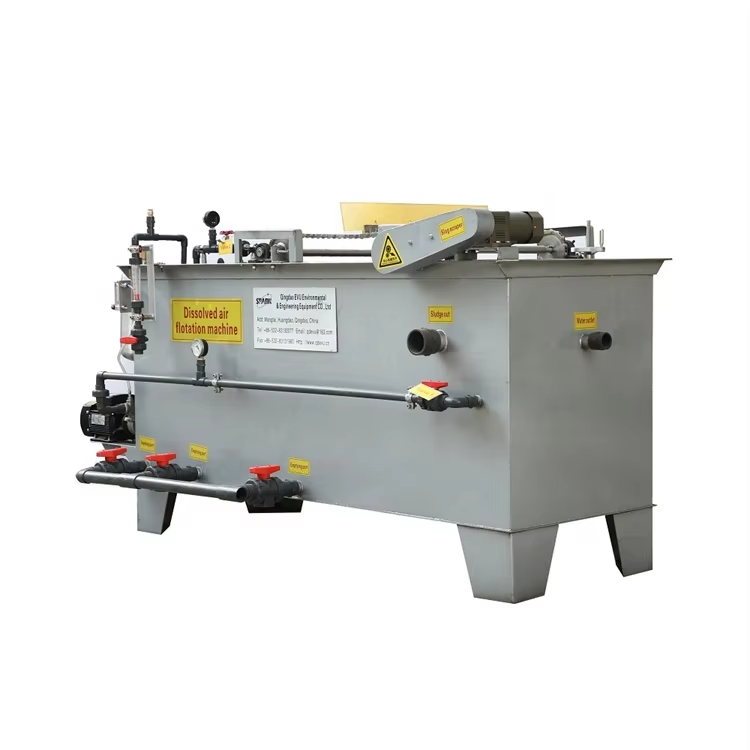
Physical treatment focuses on separating solid contaminants without changing any of their chemical properties and is usually the first of the industrial wastewater treatment steps. Enemy Number One is any solid debris including settleable solids. Incoming equipment consists of fine screens and primary treatment. Then, sedimentation tanks do the job of separating solids from liquids, in combination with the Dissolved Air Flotation (DAF) uses microbubbles to lift the light suspended solids and oils. DAF, in particular, a food and beverage wastewater treatment, is designed to concentrate and remove suspended solids from wastewater. It minimises clogging and abrasion in downstream equipment, lightens operational loads and is a cost-effective first step barrier in the wastewater treatment process. Site data from industrial installations shows that physical pretreatment and removal of suspended solid matter of over 70% lessens the burden of the downstream treatment steps.
Chemical Treatment Technologies
The primary goal of chemical treatment processes is directed toward dissolved pollutants and fine micro colloids, and usually involves precipitations and separations. This can include coagulation and flocculation of small particles using PAC and PAM to form settleable floc masses that are easily removed, and adjusting the pH of the wastewater to a neutral (stabilized) range to protect the biological treatment steps. This along with other secondary treatment processes can help to achieve the most desired qualitative aspects of treatment, removal of the persistent organic matter and lessening the burden of the downstream treatment processes. This is true for the textile, chemical, and pharmaceutical industries as well as other industrial applications. In order to achieve the qualitative aspects, adjustments with chemical additives are inevitably needed. Industry standards and guidelines have shown that these answers can reduce COD by 40 to 60% in more complex and difficult, and challenging industrial streams.
Technologies for Biological Treatment
Biological Treatment is a technology that employs microorganisms for the biodegradation of pollutants present in the water to be treated. Anaerobic processes such as UASB reactors are effective in the treatment of high-strength organic wastewaters and require low energy for the treatment. The recovery of biogas gives added value to the treatment process. The technologies of Activated Sludge and Moving Bed Biofilm Reactor are able to take out ammonia, nitrogen, and phosphorus. Combined Anaerobic-Anoxic-Aerobic configured systems apply deep nutrient removal and satisfy even the most stringent discharge standards. This method of treatment contributes to the lowering of operational costs, while at the same time conserving the environment. For a sustained period of time, biological systems in the industry have demonstrated the ability to achieve an organic matter removal rate of over 90 % and to remain stable.
Membranes and Other Advanced Separation Technologies
The modern technologies that have evolved for the purpose of advanced treatment and to ensure the delivery of high quality effluents that can be reused have relied heavily on membrane technologies. Microfiltration and ultrafiltration have the ability to remove fine particulate matter and bacteria, while reverse osmosis and nanofiltration are able to achieve deep desalination and also the removal of organic matter. MBR technology combines membrane separation and bioreactor technologies and has an advantage of a smaller overall footprint and superior effluent quality. Such technologies are necessary for applications requiring zero-liquid discharge and for those areas suffering from water scarcity. Such systems have resulted in industrial facilities being able to recycle wastewater to the extent of 80 % and thereby reducing the demand for fresh water and the pressure on the environment.
Combined Treatment Systems and the Implementation in Practice
In order to achieve effective treatment and management of industrial wastewater, there is a need for a combination of systems that are tailored to meet the demands of chemical, biological, physical, and advanced treatment systems. Each line is designed and customized for the characteristics of the wastewater to be treated, the discharge regulations, and the reutilization targets. Qingdao EVU focuses on integrated modular systems that require little human subjectivity and that demonstrate the patented technology for stable and reliable performance, simple and fast installation, and high levels of automation. Such systems are customized and adapted for use in the chemical, municipal, livestock, and food industries and prove to be reliable in providing continuous performance and to operational cost savings.Qingdao EVU is a company that has many years of experience and professionalism in the field of water reclamation and is pleased to offer its reliable, economically advantageous, and environmentally sustainable solutions to all of its clients around the globe.
Technology Choice and Longevity
When investing in systems and technologies, all new treatment options should be compared by their treatment efficiency, capital cost, operating cost, and maintenance effort. Choose the technologies that are proven, scalable, and have a low operational burden to maximize ROI. Investing in new technologies that improve the ease and effectiveness of treatment can have a substantial impact on the operational costs and burden associated with the treatment technologies. Qingdao EVU often specializes in modern high-efficiency equipment with flexible designs to ensure that operational burden is low. Partnering with the proper equipment supplier that can provide the necessary design, take responsibility for the installation, and provide ongoing service and support to the equipment is critical. Pilot projects have proven that Qingdao EVU’s technologies are high quality and provide the solutions for durable, high-performance operational requirements. Long-term value is also founded on the ability to have an effective system for ongoing government compliance and to have the operational risks associated with the system for treatment cost effectively reduced. The proper system should also support the growth of the industry in an environmentally sustainable way.