 EN
EN
The Science Behind Air Flotation Machine in Oil-Water Separation
Challenges of Oil, Grease, and FOG in Industrial Wastewater
Wastewater from industrial processes often has oil, grease, and those pesky FOGs (fats, oils, grease) mixed in, making it really hard to separate properly because these substances create tiny emulsified droplets along with all sorts of suspended solids floating around. The old school gravity separation methods just don't work well when dealing with particles under 20 microns in size. According to a study published in Chemosphere back in 2016, these small particles actually make up more than two thirds of what's considered contaminants coming out of petroleum refineries. When FOG builds up, it tends to form stubborn emulsions that mess with oxygen levels during biological treatments. And let's not forget about the pipes getting clogged too many food processing facilities report their pipes are 38 percent more likely to get blocked when there's significant FOG buildup.
Principles of Air Flotation Machine Operation
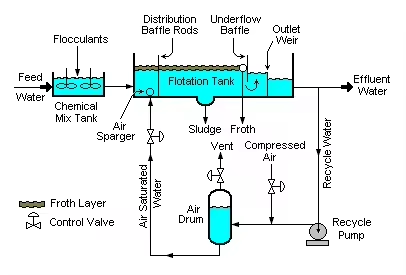
Dissolved Air Flotation or DAF systems solve many of these problems by putting pressurized air into wastewater streams. As the pressure decreases inside the flotation tank, tiny bubbles around 50 to 100 microns in size form and stick to certain types of contaminants that repel water. These combined particles become light enough to float right to the top of the tank. The latest generation of DAF units can remove about 95 percent of oils from water within just half an hour when operators get the balance right between how much air is used versus solids content, typically somewhere between 0.01 and 0.1 milligrams per milligram. Getting those hydraulic loading rates right too, usually between three and ten cubic meters per square meter per hour, makes all the difference in performance.
Role of Microbubbles in Separating Oil and Suspended Solids
Air flotation works best when we get the microbubble dynamics right. When bubbles are smaller than about 100 microns, they actually offer around four times more surface area compared to regular sized bubbles. This means they bump into oil droplets much more effectively during treatment processes. Modern equipment can produce anywhere between 5,000 to even 10,000 tiny bubbles per cubic centimeter, which results in roughly 90% of those 10 to 15 micron oil particles sticking to them. What this really does is remove those stubborn emulsified oils that standard separation methods just can't catch. As a result, filters further down the line don't have to work so hard anymore, cutting their workload somewhere between 40% and 60% depending on conditions.
Dissolved Air Flotation (DAF) System Design and Operational Dynamics
Core Components of DAF Systems for Effective Oil and Grease Removal
Modern DAF systems rely on four critical components:
- Flotation chamber: Creates distinct reaction and clarification zones for microbubble attachment and sludge separation
- Recycle loop system: Pressurizes 30–90% of treated water to generate dense microbubble clouds (40–70 µm diameter)
- Air injection mechanism: Dissolves air at 30–90 psig, producing the “whitewater” effect for particle flotation
- Surface skimmers: Automated scrapers remove concentrated oil/grease layers while minimizing turbulence
These elements work synergistically to achieve 85–95% total suspended solids (TSS) reduction in refinery wastewater applications.
Design Considerations for High-Oil Industrial Effluents
Systems processing >500 mg/L oil content require:
| Factor | Specification | Purpose |
|---|---|---|
| Chamber retention time | 20–40 minutes | Ensures complete oil-bubble contact |
| Material selection | 316L stainless steel or FRP | Resists corrosion from salty emulsions |
| Coagulant injection | Upstream mixing at 50–150 rpm | Optimizes floc size (30–80 µm) |
Designers must balance turbulence control (₀0.3 m/s flow velocity) with adequate bubble-particle collision rates.
Key Operational Parameters: Air-to-Solids Ratio, Hydraulic Loading, and Recycle Rate
Optimal performance hinges on three adjustable variables:
- Air-to-solids ratio (A/S): 0.01–0.06 mL/mg ensures sufficient bubbles without excess energy use
- Hydraulic loading: Maintain ₀4 m³/m²/hr to prevent floated layer disruption
- Recycle rate: 30–50% typically balances bubble density and operational costs
Adjusting these parameters improved grease removal efficiency by 22% in meat processing plants, according to a 2023 study.
Performance Data: Efficiency of DAF in Real-World Applications
Industry data reveals:
- Petrochemicals: 92–97% oil removal from API separator effluent
- Food processing: 85% FOG reduction in poultry wastewater at 2.8 gpm/ft² loading
- Metalworking: 94% emulsion breaking efficiency with 45 psi saturation pressure
Automated systems using real-time turbidity feedback maintain ±2% efficiency consistency, even with 35% flow rate fluctuations.
Boosting DAF Efficiency with Chemical Coagulation-Flocculation
Integrating Chemical Coagulation-Flocculation with Air Flotation
The process of chemical coagulation followed by flocculation really boosts what air flotation can do for water treatment. Basically, it takes those tiny oil droplets smaller than a micron and all the suspended solids floating around and turns them into bigger clumps that float better. When we add coagulants such as aluminum sulfate, they break down the stable emulsions of oil that otherwise stick around. Then comes the flocculant stage where these small particles get linked together forming clusters between 100 to 500 micrometers in size. What happens next is pretty interesting these big aggregates actually grab onto little air bubbles measuring about 20 to 50 micrometers each. This creates this nice stable foam on top that carries away most of the bad stuff. Studies from Water Research back in 2023 showed this method gets rid of anywhere from 85 to 95 percent of contaminants. Most modern treatment plants have figured out the best way to do this by putting coagulants right at the point where raw water enters the system, and then adding flocculants just before the DAF chamber so everything has enough time to mix properly.
Best Practices for Chemical Dosing in DAF Systems
- Flow-paced injection: Match chemical feed rates to influent fluctuations using PID-controlled pumps
- Mixing optimization: Maintain 50–150 rpm in rapid mix tanks for uniform dispersion
- Dual coagulation zones: Alternate cationic/anionic polymers to target diverse contaminants
Real-time turbidity monitoring reduces chemical waste by 18–22% compared to fixed dosing regimens.
Avoiding Over-Chemicalization: Finding the Optimal Dose
Excessive coagulant dosing increases sludge production by 30–40% while reducing floc buoyancy. The optimal dose balances:
| Parameter | Target Range | Measurement Method |
|---|---|---|
| Zeta Potential | -5 to +5 mV | Electrophoresis |
| Floc Size | 150–300 µm | Laser diffraction |
| Residual Aluminum | <1.5 mg/L | Atomic absorption spectroscopy |
Jar testing combined with streaming current detectors enables precise adjustments, cutting annual chemical costs by $12,000–$45,000 per installation.
Industrial Applications of Air Flotation Machines Across Key Sectors
Air flotation machines are critical for treating complex industrial effluents, with 78% of operators prioritizing oil-water separation efficiency in compliance-driven industries (Water Environment Federation, 2023). Their versatility supports sectors requiring high-purity water reuse or regulatory-compliant discharge.
DAF in Petrochemical Plants: Removing Oil, Grease, and Solids
Petrochemical facilities leverage DAF to handle wastewater streams containing hydrocarbons (5–15% oil content), heavy metals, and suspended solids. Modern systems achieve 92–96% TSS removal at hydraulic loading rates up to 4 GPM/ft², crucial for meeting Clean Water Act discharge limits.
Air Flotation for Oily Wastewater in Food Processing Industries
Food production plants utilize microbubble flotation to separate emulsified fats, oils, and grease (FOG) from wastewater. This prevents sewer blockages and reduces biological oxygen demand (BOD) by 60–80% before anaerobic digestion—a key factor in achieving ISO 14001 certification.
Innovations by Leading Environmental Technology Providers
Recent advances include AI-driven dissolved air control systems that adjust microbubble size (10–50 µm) in real-time based on influent characteristics. Energy-efficient designs now reduce power consumption by 30% compared to conventional models while maintaining >90% oil separation efficiency.
Future Trends and Technological Advancements in Air Flotation Machines
Emerging Innovations in Oil Contaminant Removal Efficiency
Today's air flotation equipment can separate oils with an impressive 95 to 98 percent efficiency thanks to these new microbubble generators that create tiny 20 to 50 micrometer bubbles. When we combine dissolved air flotation (DAF) technology with electrocoagulation methods, tests at refineries show contaminants get removed about 40 percent quicker than standard approaches. Another interesting development comes from ceramic membrane combined DAF systems which cut down on oily sludge creation by around 32 percent over traditional setups. This not only improves how well the oil gets separated but also tackles the bigger problem of dealing with all that leftover waste material.
Smart Monitoring and Automation in Modern DAF Systems
IoT-enabled DAF systems now utilize real-time sensors to monitor:
| Parameter | Traditional Systems | Smart Systems | Improvement |
|---|---|---|---|
| Oil detection accuracy | ±15% | ±3.2% | 367% |
| Energy consumption | 1.2 kW/m³ | 0.78 kW/m³ | 35% |
| Maintenance predictability | Reactive | Predictive | 62% fewer downtime hours |
Cloud-based platforms enable remote optimization of air-to-solids ratios and hydraulic loading rates, with AI algorithms automatically adjusting recycle flows based on incoming contaminant loads. Leading manufacturers now integrate automated chemical dosing systems that reduce coagulant overuse by 22% while maintaining <5 mg/L residual oil concentrations.
FAQ Section
What is Dissolved Air Flotation (DAF)?
DAF is a water treatment process that uses microbubbles to separate suspended solids, oils, and contaminants from wastewater.
How does air flotation improve wastewater treatment?
Air flotation enhances wastewater treatment by using microbubbles to increase the efficiency of separating contaminants, making them easier to remove.
What industries benefit from air flotation machines?
Industries such as petrochemicals, food processing, and metalworking benefit from air flotation machines as they help achieve regulatory compliance in effluent discharge.
What are the key components of DAF systems?
Key components include a flotation chamber, recycle loop system, air injection mechanism, and surface skimmers.
Table of Contents
- The Science Behind Air Flotation Machine in Oil-Water Separation
- Dissolved Air Flotation (DAF) System Design and Operational Dynamics
- Boosting DAF Efficiency with Chemical Coagulation-Flocculation
- Industrial Applications of Air Flotation Machines Across Key Sectors
- Future Trends and Technological Advancements in Air Flotation Machines
- FAQ Section