 EN
EN
Real industrial wastewater plant cases compare DAF and sediment tank separation results
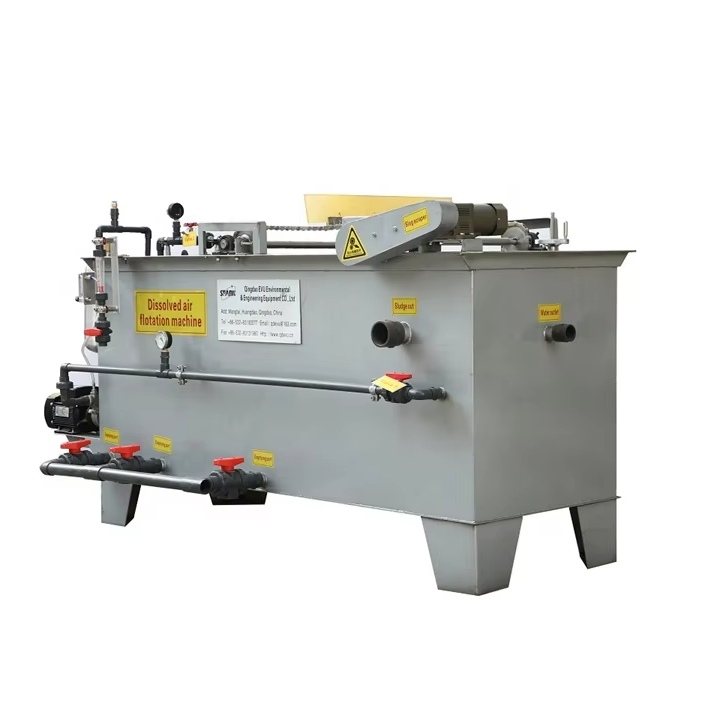
Many on-site water treatment engineers and factory environmental supervisors share obvious operation gap data after replacing gravity sedimentation tanks with dissolved air flotation equipment. A large dairy beverage processing plant ran concrete sedimentation pools for pretreatment five years ago. Production wastewater mixed with milk protein suspended solids and floating cream oil accumulated thick sludge every three days, requiring two full-time workers to enter the tank for manual cleaning. During peak production hours, unseparated oil and fine particles flowed into subsequent biochemical tanks, causing biofilm blockage and frequent discharge standard violations that brought regulatory fines. After installing fully automatic DAF equipment, both emulsified oil and granular suspended substances were intercepted on the floating slag layer at the same time, manual cleaning frequency dropped to once every two weeks and biochemical system failure incidents decreased sharply. Another livestock breeding wastewater station faced mixed pollution of manure colloids and floating grease; traditional settling facilities could not capture tiny oil wrapped particles, while DAF microbubbles combined oil adhesion and solid flocculation to achieve stable dual pollutant removal. These long-term real wastewater operation records fully verify DAF machines deliver synchronous purification of oil and suspended solids that single sedimentation technology cannot match.
Dual removal working principle for suspended solids and oil droplets
The core technical advantage of DAF equipment lies in the dual capture mechanism targeting both hydrophobic oil droplets and granular suspended solids through uniform microbubbles. The whole workflow starts with partial treated clean water pumped into sealed dissolved tanks under 0.3 to 0.5 MPa pressure to form air saturated liquid. When saturated water flows through dedicated pressure relief releasers, rapid pressure reduction generates microbubbles ranging from 20 to 50 microns with huge specific surface area. For oil pollutants, oil droplets own natural hydrophobic properties so microbubbles stick tightly to oil layer surfaces to form lightweight oil bubble composites that rise rapidly. For suspended solids including fiber colloid and organic particles, pre added PAC and PAM flocculants aggregate scattered solids into compact flocs, and microbubbles embed inside floc structures to reduce overall density. Automatic chain scrapers continuously strip the mixed slag layer containing both oil and solids from the water surface, while purified water flows out from the bottom collecting channel to enter follow-up treatment links. One set of DAF equipment completes two separation targets without two independent pretreatment pools.
Global water treatment standards set authoritative DAF performance benchmarks
Unified international wastewater emission codes and domestic CJ/T295 DAF equipment technical specifications release credible authoritative evaluation standards for simultaneous oil and suspended solid removal efficiency. EU industrial waste water control documents set clear maximum allowable outlet limits for residual oil and total suspended solids, requiring qualified flotation units to maintain over ninety percent removal rate for both pollutants under variable water load. National municipal water treatment equipment standards list microbubble uniformity and continuous slag scraping operation as mandatory passing test items. Senior water treatment researchers publish industry test reports pointing out uncertified simple flotation devices often only separate large floating oil while missing emulsified oil and fine suspended colloids. Authoritative third-party factory aging tests verify that standard DAF machines maintain stable dual pollutant interception capacity after seventy two hours non-stop running, eliminating unstable separation risks caused by low-grade simplified structures.
Multi industry wastewater scenarios requiring simultaneous oil and solid separation
Dissolved air flotation machines adapt to diversified industrial and municipal wastewater types carrying mixed oil and suspended impurities with adjustable operation parameters. Food and beverage wastewater contains cream grease fruit pulp and protein particles; medium dissolved air pressure balances bubble size to wrap oil layers and lock organic flocs together. Livestock breeding waste water mixes animal fat manure colloids and fiber residues; low speed scraper operation avoids breaking oil solid composite slag during collection. Municipal domestic sewage carries kitchen emulsified oil and domestic waste suspended fragments; wide tank design copes with large hourly water flow fluctuation without separation efficiency decline. Printing and coating waste water blends printing ink oil and pigment solid particles; closed dissolved air structures prevent volatile oil gas overflow while capturing color flocs. Every type of mixed polluted water only needs minor adjustment of air pump pressure and flocculant dosing volume to reach dual discharge standard indexes, making DAF the universal pretreatment core for multi-industry mixed pollution.
Long term economic gains from integrated oil solid pretreatment
Water treatment facilities deploying DAF integrated oil solid separation equipment gain measurable cumulative economic advantages over full equipment service life. Compact flotation tank structure cuts large concrete sedimentation pool civil investment and saves plant occupied land space. Mixed oil solid floating slag carries lower water content than sediment mud, reducing daily sludge dehydration and outward disposal expenditure significantly. Synchronous dual pollutant interception protects follow-up MBR membrane and biochemical filler from oil and particle blockage, extending core component service cycle and cutting regular maintenance labor input. Multi-year factory water station operation data shows the extra procurement cost of standard DAF systems can be fully recovered within eighteen months through saved construction sludge and after-treatment maintenance expenses. Stable qualified outlet water also eliminates regulatory penalty losses caused by excessive oil and suspended solid concentration during production peak periods.
Integrated water treatment equipment manufacturer supplies customized DAF full set solutions
Stable supply of complete DAF systems with synchronous oil and suspended solid separation capacity relies on integrated independent R&D and standardized mass production strength. EVU owns more than ten years of professional water treatment equipment manufacturing experience, with full product matrix covering dissolved air flotation machines automatic PAC PAM dosing units integrated sewage treatment devices and sludge dewatering equipment. All DAF equipment adopts full stainless steel water contact frames and fully automatic linked control panels, passing complete international CE and export certification before factory delivery. Professional technical teams provide full cycle service including water quality analysis customized tank size design on-site installation commission and long-distance remote troubleshooting. The brand has finished thousands of water treatment engineering projects across over fifty countries covering food livestock municipal and printing sectors, offering flexible single unit and full production line customized schemes matching different oil solid mixing concentration processing demands.
Table of Contents
- Real industrial wastewater plant cases compare DAF and sediment tank separation results
- Dual removal working principle for suspended solids and oil droplets
- Global water treatment standards set authoritative DAF performance benchmarks
- Multi industry wastewater scenarios requiring simultaneous oil and solid separation
- Long term economic gains from integrated oil solid pretreatment
- Integrated water treatment equipment manufacturer supplies customized DAF full set solutions