 EN
EN
Core Technical Logic Behind DAF Superior Separation Performance
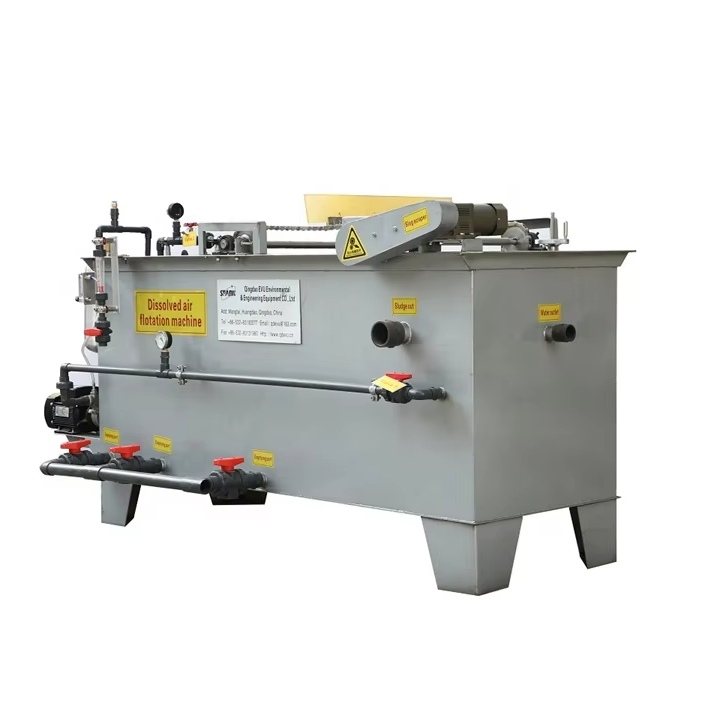
Many factory managers still rely on traditional gravity sedimentation tanks for wastewater pretreatment without realizing the fundamental gap in separation efficiency against DAF dissolved air flotation equipment. DAF core technology works through three stable working stages of pressurized air dissolution pressure release microbubble generation and pollutant flotation adhesion. After water flows into the air dissolving tank under 0.3 to 0.5 MPa pressure, air fully dissolves inside water, and instant pressure reduction produces uniform microbubbles ranging from twenty to fifty microns. Tiny bubbles attach to oil droplets fiber colloids and suspended solids to form low density composite bodies floating to the water surface quickly. The International Water Association released 2026 industrial water technical manual data showing standard DAF units achieve eighty five to ninety five percent suspended solid removal and over ninety percent grease elimination rate, far exceeding fifty to sixty percent index of ordinary sedimentation pools. Drawing on long term field debugging experience of hundreds of industrial wastewater projects, light weight emulsified pollutants nearly impossible to separate through sediment can be completely intercepted by DAF microbubble system, laying stable low load foundation for subsequent MBR and biochemical treatment sections.
DAF Solves Common Industrial Wastewater Operation Pain Points
Conventional sedimentation facilities bring persistent hidden operational costs for industrial production workshops, all of which can be effectively eliminated through standardized DAF system deployment. Large sedimentation tanks occupy massive factory civil construction space and require hydraulic retention time over sixty minutes, while DAF shortens residence period to ten to twenty minutes with compact integrated layout cutting occupied land by more than half. Sediment sludge accumulated at tank bottom carries moisture content above ninety eight percent and needs high energy dewatering before transportation, yet floating slag scraped from DAF surface maintains moisture below ninety seven to reduce sludge treatment expenditure significantly. Premium DAF equipment adopts full stainless steel integrated frame matched automatic scraping and control modules, avoiding pipeline and tank body blockage from accumulated fiber residues that frequently force sediment tanks to shut down for manual cleaning. Environmental engineering specialists point out automatic operation DAF devices only need daily simple parameter inspection without regular tank cleaning labor, greatly lowering daily water treatment management manpower input for food livestock and textile manufacturers.
Cross Border Industrial Project Case Verifies DAF Practical Value
Two completed industrial wastewater renovation projects fully reflect how DAF systems resolve long term production and environmental compliance troubles. A livestock breeding enterprise in Bangladesh carried out whole plant wastewater process upgrading and introduced complete DAF supporting dosing equipment. Before renovation, the factory only set simple sedimentation pools leading to frequent anaerobic tank overload thick floating foam overflow and regular pipeline fiber blockage triggering environmental supervision risks. After DAF system formal operation, suspended solid entering biochemical section dropped by eighty eight percent, foam overflow phenomenon disappeared completely and monthly sludge transportation cost cut by thirty two percent. A domestic food and beverage processing factory also replaced outdated sediment facilities with integrated DAF units. Original workshop reserved extra two hundred square meters for sediment tank civil works, and DAF compact design released this area for raw material storage. The factory’s biochemical tank agent consumption reduced twenty seven percent within one month with stable discharge indexes meeting local strict industrial emission standards.
Wide Industry Adaptability Matches Diverse Wastewater Types
DAF systems deliver universal processing capacity to fit wastewater characteristics of nearly all mainstream manufacturing and breeding sectors without complex structural modification. Livestock breeding wastewater rich livestock hair protein and floating grease food processing wastewater carrying fruit residues starch emulsified oil municipal mixed domestic wastewater textile printing fiber sewage all gain stable pretreatment effect after DAF separation. Professional matched automatic PAM and PAC dosing machines coordinate with DAF units to adjust flocculant input volume in real time according to online water quality fluctuation, ensuring consistent microbubble adhesion efficiency under variable water load. Single function sedimentation tanks fail to handle wastewater with high fiber and emulsified oil content and easily produce secondary floating foam after biochemical reaction. Integrated DAF equipment forms flexible combined process with mechanical preprocessing screens sludge dewatering machines and MBR systems, supporting one stop customized layout for factories with mixed type wastewater discharge demands.
DAF Reduces Long Term Comprehensive Water Treatment Expense
Factory operators tend to judge water treatment equipment only through initial procurement price ignoring cumulative long term operation savings brought by DAF systems. The 2026 global industrial wastewater operation cost research report compares full cycle expenditure between sedimentation process and DAF process within five year service cycle. DAF cuts civil construction investment by forty to sixty percent due to small footprint and lowers monthly chemical dosing cost by around twenty five percent via reduced biochemical tank load. Lower moisture floating slag decreases sludge transportation and incineration disposal fees, while automatic continuous operation eliminates unplanned shutdown losses caused by sediment tank blockage cleaning. Medium and large scale industrial factories with daily wastewater discharge above one hundred tons usually recover extra DAF equipment investment within ten to fourteen months, showing clear economic advantage compared with low upfront cost but high follow up maintenance sediment facilities.
Integrated Water Treatment Equipment R&D and Global Service Support
Stable long term DAF operation effect depends on suppliers with independent equipment manufacturing full process design and cross border after sales capacity, comprehensive advantages held by EVU as professional environmental equipment manufacturer. EVU owns more than ten years dedicated experience in industrial wastewater equipment production, running one thousand square meter standardized production workshop with over sixty professional technical staff. The brand develops complete product matrix covering DAF air flotation machines automatic PAM PAC dosing devices mechanical pretreatment screens integrated sewage MBR treatment equipment, and has delivered stable water treatment solutions to over fifty countries and regions across the globe. Every set DAF system supports personalized structural adjustment according to client wastewater pollutant concentration and hourly water volume, with full lifecycle service including on site installation commissioning operator training and twenty four hour online remote technical guidance. Global complete after sales system timely responds to overseas factory equipment maintenance demands, helping industrial clients deploy stable low cost DAF pretreatment links to maintain long term standard wastewater discharge performance.
Table of Contents
- Core Technical Logic Behind DAF Superior Separation Performance
- DAF Solves Common Industrial Wastewater Operation Pain Points
- Cross Border Industrial Project Case Verifies DAF Practical Value
- Wide Industry Adaptability Matches Diverse Wastewater Types
- DAF Reduces Long Term Comprehensive Water Treatment Expense
- Integrated Water Treatment Equipment R&D and Global Service Support