 EN
EN

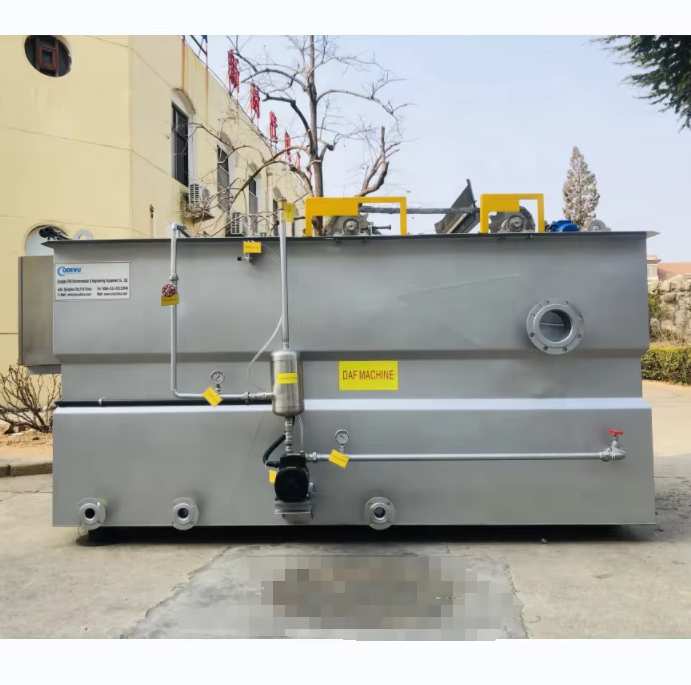
Rapid, Plug-and-Play Installation of Packaged Sewage Treatment Plants
Modern packaged sewage treatment plants are redefining project timelines by shifting the bulk of construction from the site to the factory. The result is a plug-and-play installation that dramatically reduces on-site disruption and accelerates the path to regulatory compliance.
Factory-assembled modular units cut on-site construction time by up to 70%
Traditional sewage treatment plants rely on extensive on-site civil infrastructure — concrete tank construction, equipment mounting, and complex piping — that can take months to complete. A packaged sewage treatment plant, in contrast, arrives as a fully assembled, factory-tested system. By moving the heavy lifting indoors, manufacturers can run parallel assembly lines, avoid weather delays, and enforce rigorous quality control. According to a 2023 analysis by the Water Environment Federation, modular package plants can slash on-site construction time by up to 70% compared to conventional build methods.
The table below illustrates typical time savings across key installation phases:
| Installation Phase | Conventional Plant (weeks) | Packaged Plant (weeks) |
|---|---|---|
| Civil works (excavation, foundation) | 8–12 | 2–3 |
| Mechanical & electrical equipment setup | 4–6 | 1–2 |
| Piping integration & commissioning | 3–4 | 1 |
| Total on‑site timeline | 15–22 | 4–6 |
Once the modular unit is delivered, it can be placed on a simple prepared base, connected to inlet/outlet pipes, and powered up — often within a week. Even large-scale systems treating up to 250,000 gallons per day become operational in a fraction of the time, allowing municipalities and industries to meet wastewater needs swiftly and efficiently.
Minimal civil works and reduced need for specialized labor accelerate deployment
A packaged sewage treatment plant drastically reduces on-site civil works. Instead of constructing large concrete basins and intricate piping networks, the installation requires only a level concrete pad or compacted gravel base. The pre-piped and pre-wired internal modules minimize the need for skilled pipefitters, electricians, and heavy equipment operators. A 2022 study by the American Society of Civil Engineers noted that prefabricated systems can reduce specialized on-site labor by 60%, as the assemblies are plug-and-play by design.
This simplicity translates directly into faster deployment. Local crews can handle the minimal foundation work and utility tie-ins without the steep learning curve typical of conventional treatment plant construction. The containerized design simplifies logistics: a single crane lift positions the unit, and the mechanical and electrical interfaces are standardized. Project managers can compress the overall schedule, avoid labor shortages, and bring the sewage treatment plant online in weeks—not months—delivering a reliable, compliant wastewater solution with remarkably little on-site effort.
Streamlined Operation and Low-Maintenance Performance of Packaged Sewage Treatment Plants
Packaged sewage treatment plants are engineered to deliver reliable, efficient treatment with minimal ongoing effort. Their design prioritizes automation and accessibility, dramatically reducing the daily burden on operators while ensuring consistent effluent quality.
Integrated aerobic treatment with automated controls reduces daily operator input
The core of a modern package plant is an aerobic biological process — such as suspended growth or attached growth — tightly coupled with intelligent automation. Programmable logic controllers (PLCs) and supervisory control and data acquisition (SCADA) systems continuously monitor dissolved oxygen, mixed liquor suspended solids, and flow rates, then automatically adjust blower output, sludge recirculation, and chemical dosing. This closed-loop control eliminates the need for manual sampling and hourly adjustments. Facilities using automated package plants reported a 40% reduction in daily operator hours compared to conventional treatment systems, according to a 2023 industry survey by the Water Environment Federation. Alarms and remote telemetry further reduce site visits by alerting staff only when attention is truly needed — a clogged pump, a pH upset, or a blower fault. Automated sludge wasting cycles and self-cleaning membranes prevent gradual performance decline, removing the need for constant tweaking by skilled personnel. By embedding process expertise into the control logic, these systems allow a single operator to oversee multiple sites or attend to a plant for just a few hours per week — transforming wastewater management from a labor-intensive chore into a largely hands-off function.
Self-contained design simplifies monitoring, troubleshooting, and routine servicing
Because all process components are housed within a single, compact enclosure, packaged plants drastically reduce the complexity of day-to-day upkeep. Critical elements — screens, aeration basin, clarifier, disinfection unit, and controls — are arranged in a logical, accessible sequence, often with clear labeling and built-in sampling ports. This layout allows a technician to trace a problem from inlet to outlet in minutes, without navigating sprawling treatment lagoons or separate structures. Routine tasks such as visual inspection of mixed liquor, cleaning of weirs, or replacement of diffuser membranes can be performed from ground level, often without confined-space entry or specialized tools. Well-designed self-contained units can cut unscheduled servicing time by up to 30% compared to spread-out field-built plants, per EPA maintenance guidelines. Troubleshooting is further simplified by standardized documentation and remote diagnostics from the manufacturer; a phone call or video call can often resolve an issue without an on-site visit. Spare parts are common and pre-engineered, minimizing inventory. The result is a predictable, low-drama maintenance schedule that keeps the sewage treatment plant operating reliably year after year, with minimal downtime and no surprises.
Regulatory Confidence and Scalable Reliability in Pre-Engineered Sewage Treatment Plants
Pre-engineered sewage treatment plants are designed to meet stringent discharge standards, providing operators with confidence in regulatory compliance from the outset. These systems are pre-certified to common effluent norms — including those set by the U.S. Environmental Protection Agency and state environmental agencies — simplifying the permitting process and reducing the risk of non-compliance penalties. Their modular construction inherently supports scalability: as demand grows, additional treatment capacity can be added by connecting parallel units without disrupting ongoing operations. This plug-and-play expandability ensures that a single sewage treatment plant can evolve with the needs of a community or industrial facility, delivering consistent performance and long-term reliability.
FAQ
What is a packaged sewage treatment plant?
A packaged sewage treatment plant is a factory-assembled and pre-tested wastewater treatment system that arrives ready for installation, requiring minimal on-site construction and labor.
How does a packaged plant reduce installation time?
By shifting the bulk of construction to the factory, packaged plants can bypass weather delays, enforce quality control, and minimize civil works, cutting on-site construction time by up to 70%.
What types of technologies are integrated into these plants?
Packaged plants incorporate aerobic biological processes, automated controls like PLCs and SCADA systems, and pre-wired and pre-piped modules for plug-and-play operation.
What are the key benefits of packaged sewage treatment plants?
They offer rapid installation, reduced reliance on specialized labor, streamlined maintenance, automated operation, scalability, and confidence in meeting regulatory standards.