 EN
EN

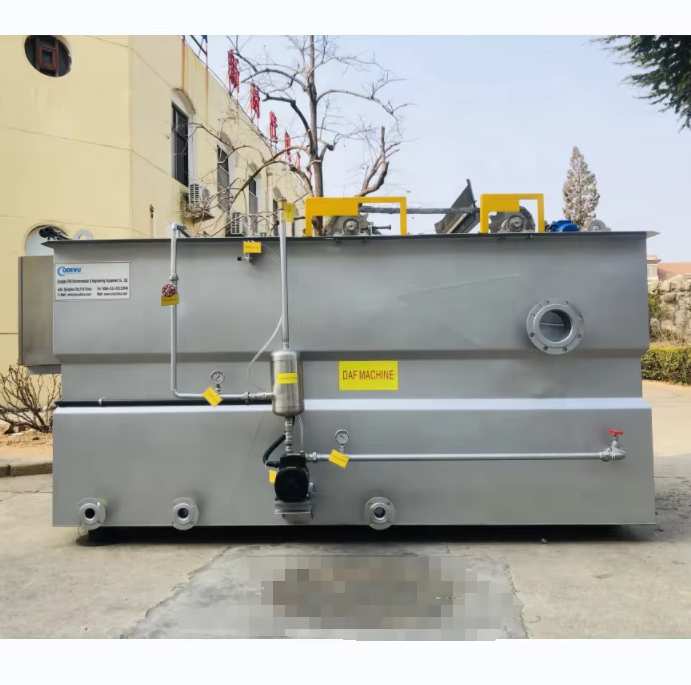
High-Efficiency Sludge Dewatering and Volume Reduction
Efficient dewatering transforms low-solids sludge into a manageable cake—reducing volume by 60–90% and cutting transportation and disposal costs while recovering process water for reuse.
Centrifuge and Filter Press Systems for Optimal Solids Separation
Decanter centrifuges and filter presses are the two most widely deployed mechanical dewatering technologies in modern sewage treatment plants. Centrifuges apply continuous centrifugal force to rapidly separate solids from liquid, offering compact footprints, high throughput, and consistent cake solids of 20–30% dry weight. Filter presses use high-pressure filtration to achieve denser cakes—typically 30–40% dry solids—significantly reducing haulage weight and frequency. Selection hinges on sludge characteristics (e.g., fat, oil, grease content; particle size distribution; inlet solids concentration) and target cake quality. For example, a municipality-scale upgrade from belt press to centrifuge achieved a 75% sludge volume reduction (2022), while an industrial plant using high-pressure filter presses cut truck rolls by half. Both systems routinely retain over 95% of solids—minimizing recycle to the main treatment train—especially when paired with upstream thickening and automated polymer conditioning that adapts to real-time feed variability.
Polymer Conditioning and Real-Time Feed Optimization for Maximized Cake Dryness
Chemical conditioning is pivotal to releasing bound water before mechanical dewatering. Cationic polymers neutralize negative charges on sludge particles, enabling robust floc formation and efficient water release. Dose precision is critical: underdosing leads to poor separation and equipment blinding; overdosing creates sticky, hard-to-handle sludge and inflates chemical costs. Real-time optimization—using inline sensors like streaming current detectors and optical clarity meters—feeds data directly to adaptive dosing pumps, dynamically adjusting polymer addition based on floc quality and filtrate turbidity. A 2023 benchmarking study across twenty utilities found closed-loop control improved cake dryness by 2–4 percentage points versus fixed-rate dosing. That incremental gain delivers outsized value: each additional percentage point in cake solids reduces hauling expenses by 3–5% for a mid-sized facility. When matched to sludge charge demand, this approach turns polymer conditioning into a low-capital, high-impact lever for peak dewatering performance.
Reliable Sludge Stabilization and Pathogen Inactivation
Thermophilic Anaerobic Digestion: Energy Recovery and Regulatory Compliance
Thermophilic anaerobic digestion operates at 49–57°C to accelerate volatile solids destruction while generating methane-rich biogas for combined heat and power. It serves as both a stabilization and resource recovery process—meeting EPA Class A biosolids standards, which require fecal coliform levels below 1,000 MPN/g total solids. Well-operated thermophilic systems consistently achieve 99% pathogen reduction (EPA, 2023), supporting long-term regulatory compliance and energy resilience. Its dual function—waste minimization and on-site energy generation—makes it especially strategic for larger facilities seeking operational independence and lifecycle cost savings.
Alkaline Stabilization as a Low-Capital, Rapid-Deployment Option for Biosolids Safety
Alkaline stabilization uses lime or similar reagents to raise sludge pH to ≥12 for a defined contact time, halting biological activity and inactivating pathogens within hours. Unlike thermal or biological alternatives, it requires no reactor infrastructure—making it ideal for smaller facilities or interim use during digester maintenance. The resulting material meets regulatory criteria for land application under specific biosolids management frameworks. While it does not recover energy, its simplicity, speed, and low capital cost provide immediate public health protection and operational flexibility—key advantages where budget or timeline constraints limit other options.
Smart Monitoring and Predictive Maintenance for Sludge Handling Equipment
Sludge handling equipment—including centrifuges, belt presses, and progressive cavity pumps—faces abrasive, corrosive, and high-load conditions that increase failure risk. Smart monitoring integrates IoT sensors measuring vibration, temperature, pressure, and motor current, feeding data into machine learning models trained to recognize early degradation patterns—such as bearing wear or seal leakage—up to 45–75 days before failure. Predictive maintenance schedules interventions during planned downtime, avoiding emergency shutdowns that compromise treatment continuity. According to Deloitte (2023), this shift reduces unplanned downtime by up to 70% and lowers maintenance costs by 25%. For sewage treatment plants, such reliability strengthens regulatory compliance, extends asset life, and sustains consistent sludge throughput without costly reactive repairs.
End-to-End Integration of Sludge Treatment Across the Sewage Treatment Plant Process Chain
Coordinated Flow Design: From Thickening to Disposal in Modern Sewage Treatment Plants
True efficiency emerges not from optimizing individual units—but from integrating thickening, stabilization, dewatering, and disposal into a unified, responsive chain. Integrated design aligns capacities across stages, eliminates bottlenecks, and enables shared resources—like centralized polymer dosing and a single control platform—that adjust chemical and energy inputs in real time based on upstream sludge load and composition. A 2023 life cycle assessment confirmed that direct coupling of anaerobic digestion with land application reduces greenhouse gas emissions by eliminating intermediate storage and transport. Closed-loop monitoring also links dewatered cake output to hauler scheduling—enabling just-in-time removal and minimizing on-site storage. This orchestration delivers higher throughput, consistent biosolids quality, lower operating costs, and stronger compliance outcomes across the entire sludge management lifecycle.
FAQ
What is sludge dewatering?
Sludge dewatering is a process that removes water from sludge, transforming it into a thicker, manageable cake. This reduces the volume significantly, thereby cutting transportation and disposal costs and allowing for process water recovery.
What are decanter centrifuges and filter presses?
Decanter centrifuges use centrifugal force to separate liquids and solids, offering compact footprints and consistent solids levels. Filter presses achieve higher dry solids content using high-pressure filtration, making them suitable for reducing haulage weight and frequency effectively.
How does polymer conditioning help in sludge treatment?
Polymer conditioning uses cationic polymers to bind sludge particles for efficient water release. It ensures optimal dewatering while dynamically adjusting dosing levels through real-time sensors, improving cake dryness and lowering costs.
What are the advantages of thermophilic anaerobic digestion?
This process stabilizes sludge, generates methane-rich biogas, and achieves EPA Class A biosolids standards. It delivers energy recovery, long-term compliance, and cost savings for larger facilities.
What is alkaline stabilization?
Alkaline stabilization uses lime to raise sludge pH quickly, halting biological activity and inactivating pathogens. It is a simple, low-cost solution for biosolids safety, ideal for smaller facilities or interim use.
How does smart monitoring improve sludge equipment reliability?
Smart monitoring employs IoT sensors and machine-learning models to detect early degradation patterns, enabling predictive maintenance. This reduces downtime, extends equipment lifespan, and ensures consistent sludge throughput.
What is end-to-end integration in sludge treatment?
End-to-end integration involves coordinating thickening, stabilization, dewatering, and disposal into a unified process chain. This enhances efficiency, reduces emissions, and ensures stronger compliance throughout the sludge management lifecycle.
Table of Contents
- High-Efficiency Sludge Dewatering and Volume Reduction
- Reliable Sludge Stabilization and Pathogen Inactivation
- Smart Monitoring and Predictive Maintenance for Sludge Handling Equipment
- End-to-End Integration of Sludge Treatment Across the Sewage Treatment Plant Process Chain
-
FAQ
- What is sludge dewatering?
- What are decanter centrifuges and filter presses?
- How does polymer conditioning help in sludge treatment?
- What are the advantages of thermophilic anaerobic digestion?
- What is alkaline stabilization?
- How does smart monitoring improve sludge equipment reliability?
- What is end-to-end integration in sludge treatment?