 EN
EN

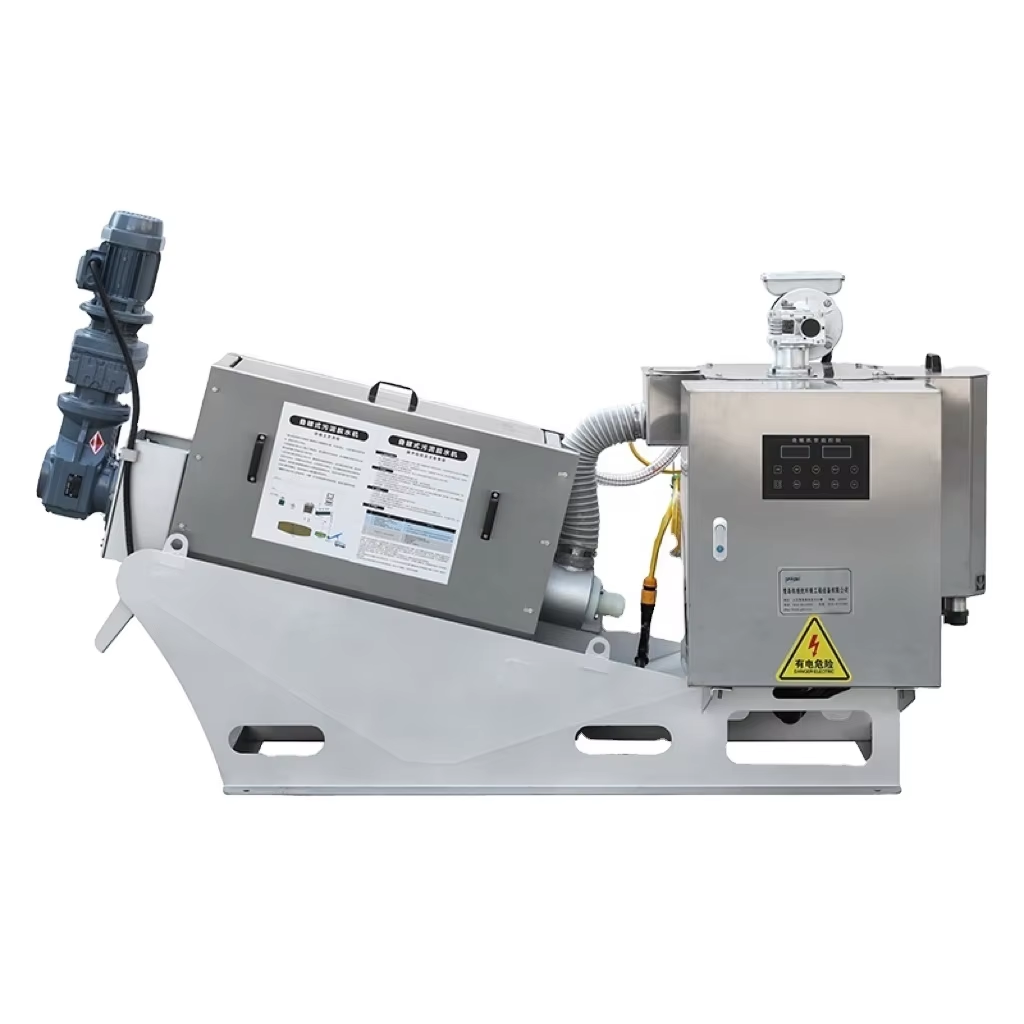
How Sludge Dewatering Machines Achieve Volume and Weight Reduction
Mechanisms of moisture removal: centrifuges, filter presses, and belt presses
The main types of sludge dewatering equipment are centrifuges, filter presses, and belt presses, each working differently but all aiming to get rid of excess water from sludge. Centrifuges spin really fast, around 2500 to 3500 revolutions per minute, which creates enough force to push out water from solid materials. These usually leave behind what's called cake material containing roughly 18 to 25 percent dry solids after processing. Belt presses work another way entirely. They squeeze sludge between two permeable belts while letting gravity do part of the job too. This method tends to work well when dealing with sludges that aren't too thick or concentrated. For those wanting even drier results, filter presses might be the answer. These devices press sludge into special chambers covered with cloth filters, sometimes applying pressure as high as 225 pounds per square inch. The end product here can reach anywhere from 30 to 45 percent dryness depending on conditions. All told, using any of these techniques cuts down the overall volume of sludge by about 70 to 90 percent compared to untreated sludge, making transportation and disposal much easier later on. Choosing the right machine depends largely on what kind of sludge needs treatment. Fine particles respond better to centrifuges whereas filter presses tend to perform best when there's lots of grit or inorganic material mixed in with the sludge.
From 95–99% to 15–30% moisture content: impact on sludge density and handling
The process of dewatering changes sludge from what's basically a watery mess containing around 95 to 99 percent water into something more solid, with moisture content dropping to between 15 and 30 percent. When it's still full of water, this stuff acts like thick goo weighing approximately 1,000 to 1,050 kilograms per cubic meter and needs special trucks and containers for transport. Once we cut down on all that extra water, the amount of actual solid material goes up about five to seven times over, which makes the whole thing denser at around 300 to 450 kg per cubic meter. What happens next is pretty cool actually - these transformed materials can be stacked without leaking everywhere, won't stick to machinery surfaces, and work better for composting since they allow air circulation. Think about it: ten cubic meters worth of wet sludge gets reduced down to only one to three cubic meters after processing. That represents an impressive 70 to 90 percent volume decrease, meaning regular construction equipment like front-end loaders become sufficient for moving everything around instead of needing those complicated pumping systems and hoses.
Transport Cost Savings Enabled by Sludge Dewatering Machines
Fewer truckloads, lower fuel use, and reduced labor per ton of dry solids
Dewatering machines work by turning sludge into something much easier to handle - basically making it into compact cakes that stack neatly on top of each other. When moisture levels drop from around 95% down to just 15-30%, the overall volume gets reduced somewhere between 60% and maybe even 90%. That means significantly fewer trucks need to make the journey. What happens in practice? Well, each truck load ends up carrying roughly four times as much dry material compared to what it would carry otherwise. Facilities report saving about 40% on fuel costs over the course of a year alone. Driver labor requirements go down too since there's simply less time spent moving things around. Plus, vehicles last longer because they're driven fewer miles and aren't subjected to those harsh, abrasive loads anymore. Most wastewater treatment plants find that processing 10 tons of wet sludge results in cutting out anywhere from three to five full truck trips without compromising their ability to remove all those solids effectively.
Case evidence: 75% fewer hauls at a 50 MGD municipal wastewater plant
At one municipal wastewater treatment plant handling 50 million gallons per day, they put in place a filter press system for sludge dewatering and saw amazing results. The sludge went from being 98% water down to just 18%, which cut the overall volume by about four-fifths. What does that mean practically? Instead of making 32 weekly trips to dispose of the sludge, they only needed to do it 8 times now. That's a huge drop of 75%. Looking at their bottom line, the plant saved around $312k every year just on fuel costs and driver paychecks according to Wastewater Digest from last year. Plus, they didn't have to spend another $200k on new trucks as originally planned. Maintenance bills for the fleet also dropped significantly because those vehicles weren't logging as many miles anymore. All these savings really highlight why big operations with lots of throughput get the best return on investment when they incorporate proper dewatering techniques right from the start.
Disposal Cost Reduction Through Regulatory Compliance and Waste Classification
Lower landfill tipping fees for dewatered cake (non-hazardous classification)
When sludge goes through the dewatering process, it changes from being mostly liquid to something more solid, which means it can be dumped at regular landfills without special hazardous waste requirements. Looking at figures from WasteExpo 2023, we see that facilities pay anywhere between 40 to 60 percent less when disposing of dewatered cake compared to raw liquid sludge. The cake form is much more stable structurally, so there's no risk of leachate forming that would lead to extra charges for environmental contamination. Plus, since the volume drops significantly, operators don't have to pay as much based on how many cubic yards they're getting rid of each time. Take a plant that handles around 100 tons of wet sludge every day for instance. Switching to dewatering could cut annual disposal expenses by well over seven hundred thousand dollars just on the cost side alone, not counting any other savings from compliance improvements.
Avoiding hazardous waste handling costs and documentation burdens
When sludge gets dewatered enough to be considered non-hazardous, it doesn't have to follow all those RCRA rules for hazardous waste anymore. That means companies save over $900 per ton on compliance costs alone. No need for those EPA manifests or endless paperwork about where everything goes. Plus, they don't have to hire special trucks for transporting hazardous materials. We're talking about saving around 15 to 20 staff hours every week just on these administrative tasks. And let's not forget the big money saver at landfills. Hazardous waste disposal runs about $1,200 per ton while regular municipal trash only costs around $300 (according to U.S. EPA data from 2024). For businesses looking to stay out of trouble with regulators, investing in good sludge dewatering equipment makes sense. These machines help prevent Clean Water Act violations that could lead to factory closures or fines running into the hundreds of thousands of dollars simply because waste wasn't properly classified or handled according to regulations.
FAQ
What types of sludge dewatering equipment are available?
The main types of sludge dewatering equipment include centrifuges, filter presses, and belt presses, all designed to remove excess water from sludge efficiently.
How much moisture reduction is possible through dewatering?
Dewatering can reduce the moisture content of sludge from about 95-99% to between 15-30%, significantly transforming it from liquid to a more solid state.
What are the transport cost benefits of sludge dewatering?
Transport cost savings are achieved by reducing the volume of sludge, resulting in fewer truckloads, lower fuel use, and reduced labor per ton of dry solids.
How does sludge dewatering affect disposal costs?
Disposal costs are reduced through regulatory compliance as dewatered sludge can be processed as non-hazardous waste, resulting in lower landfill tipping fees.