 EN
EN

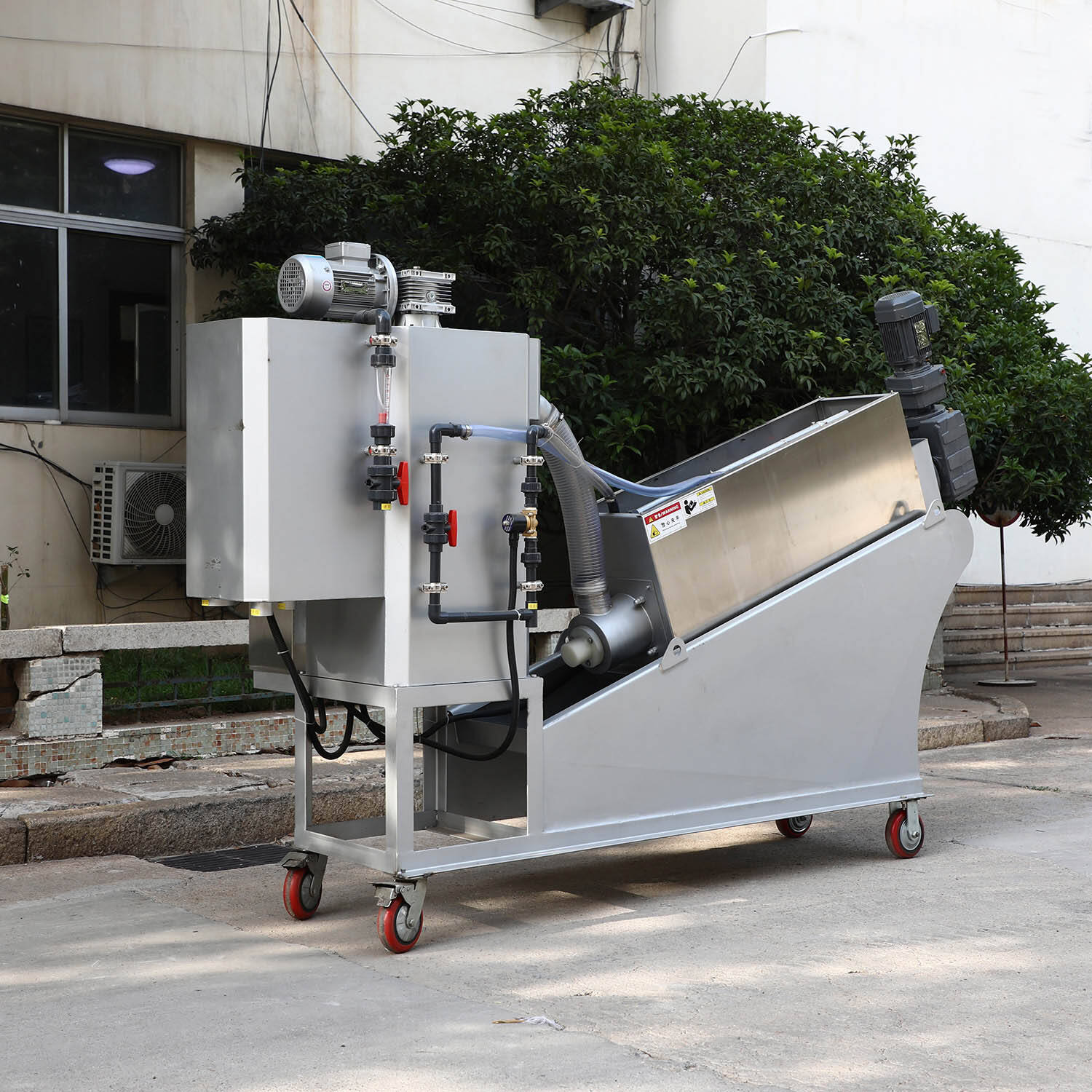
Moisture Reduction Performance and Cake Dryness Consistency
Achieving <65% cake solids across diverse feedstocks: data from 12 municipal wastewater plants
Sludge dewatering systems that perform at high levels regularly hit over 65% cake solids when processing different types of sludge including primary, secondary, and digested varieties. Real world testing at twelve municipal wastewater facilities backs this up. Looking at specific results, primary sludge starting at around 4.5% influent solids dried out to about 68.3%. Secondary sludge with just 1.2% influent came out at 66.1% cake dryness. Even tricky colloidal rich digested sludge managed to reach 65.7% when operators fine tuned their polymer dosing strategies. These consistent results mean significantly less material needs to be disposed of since waste volume drops somewhere between 40 and 60% compared to those old methods that only produced below 60% solid cakes. The cost savings add up fast too with lower landfill fees and transportation costs, plus these systems help plants stay within all those tough biosolids disposal rules.
Minimizing moisture deviation under variable feed conditions: case study on food processing sludge (±3.2% avg. deviation)
Researchers conducted a six month field test on food processing sludge, which tends to be quite unpredictable with its changing viscosity and fluctuating organic loads. What they found was pretty impressive actually â the moisture content only varied by about 3.2% on average throughout the whole period, even though the incoming solids ranged anywhere from 1.8% all the way up to 5.1%. By adjusting pressure in real time and using smart polymer injections, the system maintained good performance levels. For instance, when dealing with poultry waste, they managed an average of around 67.5% solids (give or take 1.8%), and for those tricky fibrous vegetable sludges, they kept it steady at approximately 66.2% (plus or minus 2.1%). Such consistent results mean fewer headaches with regulations and less financial uncertainty for food producers who have to meet strict EPA standards and various state requirements for wastewater discharge. Compared to traditional dewatering methods, this approach cuts down variability by nearly 60%, making it a game changer for many facilities struggling with waste management challenges.
Energy Efficiency and Throughput Capacity of Sludge Dewatering Machines
Benchmark specific energy consumption: <0.8 kWh/kg HâO removed in top-tier centrifuges and belt presses
The best centrifuges and belt presses on the market today can get down to under 0.8 kWh for every kilogram of water they remove from waste streams. The International Water Association checked this figure at 47 different municipal treatment plants during their 2023 equipment evaluation. What makes this number really important is that it shows actual day-to-day efficiency, not just what the motors say on paper. When facilities hit these energy targets, they see real savings in their electricity bills and cut down on greenhouse gas emissions too. Several factors make this possible including things like...
- Low-friction scroll geometries that cut mechanical losses
- Variable-frequency drives (VFDs) dynamically matching torque to real-time sludge rheology
- Closed-loop polymer dosing that eliminates overdosing and chemical waste
Food processors upgrading to these systems report 28% lower energy costs, especially impactful during high-load production cycles.
Sustained throughput under real-world load fluctuationsâfield performance vs. rated capacity
Unlike conventional units, high-performance dewatering machines maintain â¥92% of rated throughput even with feed concentration swings up to ±35%. Over a 15-month evaluation across 12 wastewater facilities, average throughput deviation was just 3.8% when processing mixed industrial sludgeâfar outperforming legacy systems, which suffered 15â22% capacity drops under similar variability. This resilience stems from:
- Adaptive torque control in centrifuges that responds instantly to solids surges
- Dynamic belt tensioning that preserves filtration integrity across viscosity shifts
- Rheology sensors that auto-adjust feed rates before destabilization occurs
Chemical manufacturers using these systems cite a 64% reduction in process interruptions, confirming strong ROI in plant-wide reliability.
Smart Automation and IoT Integration in Sludge Dewatering Machines
Modern sludge dewatering machines integrate Industrial Internet of Things (IIoT) architectureânot as an add-on, but as foundational to consistent, low-intervention operation. Embedded intelligence enables predictive response, remote adaptability, and cross-system interoperability within SCADA and digital twin environments.
Real-time sensor monitoring and predictive maintenance for reduced downtime
When plants keep an eye on things like pressure differences, vibrations across equipment, and how much torque is being applied, these measurements get fed into smart systems that learn what signs indicate problems before they happen big time. Think about when bearings start wearing down in centrifuges long before they actually fail, or when belts slowly begin drifting out of alignment in those filter presses. Plants that have implemented such monitoring systems are seeing around 30 percent fewer unexpected stoppages because maintenance gets planned ahead of time instead of reacting after something breaks. The average time between breakdowns goes up roughly two and a half times compared to traditional methods. Maintenance crews also spend about 22% less time doing repairs each year based on reports from operators collected by the Water Environment Federation. These improvements translate directly into cost savings and better overall plant performance.
Remote operation and adaptive process control for dynamic sludge characteristics
With PLC automation at work, operators can tweak dewatering settings from afar, changing things like G-force levels, belt speeds, or how much polymer gets added based on real time readings of viscosity and solids content. Seasonal surges in sludge happen all the time too think about those spikes after harvest season when food waste piles up or during storms when industrial runoff increases. The system handles these changes automatically so there's no need for someone to manually reset everything. Cake dryness stays right where it should be even if the incoming material suddenly changes character. Operators don't have to babysit the process anymore, which means consistent results whether it's morning shift or midnight, winter or summer.
Robust Adaptability Across Industrial Sludge Streams
The nature of industrial sludge can be all over the map. Food processing operations generate sludge loaded with fats that break apart easily under stress. Chemical waste might have heavy metals mixed in with various solvents. Pulp and paper mills contribute their share of abrasive fibers, while mining operations leave behind material full of grit and big particles. Modern dewatering equipment handles this wide range of materials through adaptable mechanical systems and smart feedback mechanisms. These machines automatically adjust polymer doses based on viscosity levels, making sure flocs form properly no matter what kind of organic material is present. The feed rate control system works across a broad spectrum, handling influent solids concentrations anywhere between 1% and 15%. Special alloy parts and ceramic wear plates stand up to the toughest particulates without wearing down quickly. What makes these systems really valuable is their ability to handle multiple waste streams at once. Municipal treatment facilities can take in regulated industrial waste without affecting the final product quality. Real world testing shows that even when the makeup of incoming sludge shifts during processing, the resulting cake maintains consistent dryness within about 4% of the target level throughout the entire cycle.
FAQ
What are the benefits of achieving <65% cake solids in sludge dewatering systems?
Achieving <65% cake solids leads to significant reductions in waste volume by 40 to 60%, providing cost savings in landfill fees and transportation costs, while ensuring compliance with biosolids disposal regulations.
How do modern sludge dewatering machines ensure energy efficiency?
Modern machines achieve energy efficiency by using low-friction scroll geometries, variable-frequency drives, and closed-loop polymer dosing, resulting in substantial energy cost savings and reduced greenhouse gas emissions.
What role does IIoT play in sludge dewatering systems?
IIoT integration in sludge dewatering systems provides foundational support for consistent, low-intervention operation, enabling predictive maintenance, remote adaptability, and improved plant performance.
How do these systems handle different types of industrial sludge?
Modern systems adapt to various sludge types, adjusting polymer doses and feed rate control based on viscosity levels, and are equipped to manage multiple waste streams simultaneously while maintaining consistent cake dryness.