 EN
EN

Air-to-Solids Ratio: The Core Efficiency Driver for Dissolved Air Floatation Machine Performance
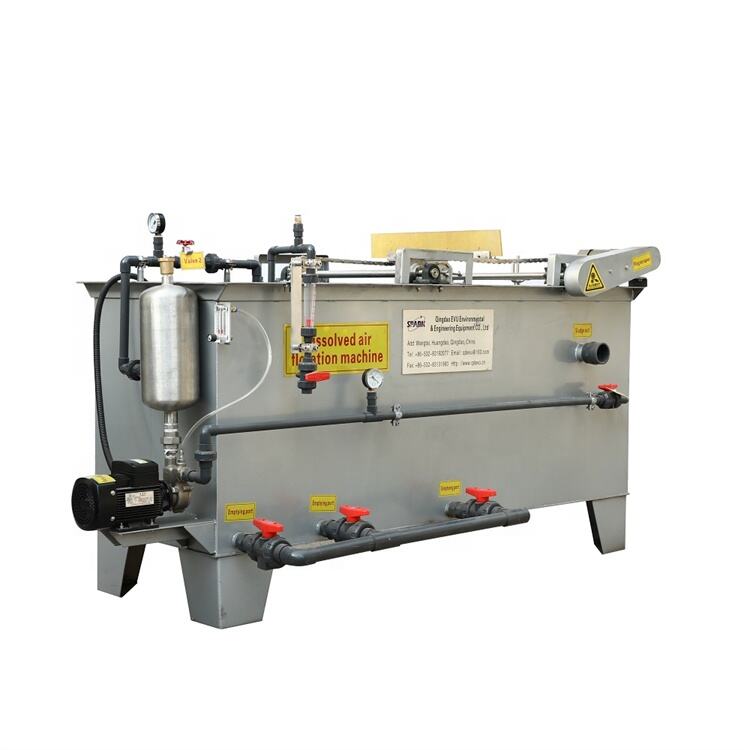
Optimal A/S Range for Robust Floc-Bubble Attachment and Scum Quality
The A/S ratio, which basically means how much air gets pumped in compared to the amount of solids floating around, is probably the best way to tweak how well flotation works. Most folks in the industry agree after looking at all sorts of real world operations and research papers that somewhere between 0.005 and 0.06 kg of air per kg of solids tends to work best. When we stay within these numbers, the tiny bubbles stick nicely to the solid particles without breaking them apart. At the higher end of 0.06, the stuff starts clumping together into nice buoyant masses that float up evenly and eventually form thick scum on top that can be skimmed off easily. But if we go below 0.005, there just aren't enough bubbles to lift everything properly. And when we push past 0.06, too much air creates turbulence that actually breaks down those nice clumps and messes up the whole separation process. This affects not just the physics of what happens but also makes the whole operation less reliable day to day.
Risks of Imbalance: Sludge Carryover vs. Weak Scum Formation at Low/High A/S
When the air-to-solids ratio drops below 0.005, solids simply don't lift properly during treatment processes, especially when dealing with heavier mineral sludge or older flocs that have become compacted over time. The result? Much higher turbidity levels in the final effluent stream. Some recent research shows this can actually degrade water quality by more than 30% compared to what we see at ideal operating conditions according to Water Research findings from last year. On the flip side, too much air injection above 0.06 creates serious problems too. The system becomes unstable hydraulically as excess air literally tears apart those delicate flocs, leaving behind weak, broken scum that won't skim efficiently off the surface. And let's talk about energy costs here too. Every small increase of just 0.01 in the A/S ratio pushes pump requirements up between 12 and 18 percent. That's money going out the window fast. Given these two major issues, it's clear that getting the A/S ratio right isn't just good practice anymore. It's absolutely critical if plants want to maintain stable operations while keeping their electricity bills under control.
Hydraulic Loading Rate and Retention Time: Balancing Throughput and Clarification in DAF Flotation Units
The HLR–Retention Trade-off: Why Exceeding 20 m/h Often Compromises Turbidity Removal
The hydraulic loading rate (HLR), which basically means dividing the flow rate by the tank's surface area, determines how long water stays in the system and creates the physical conditions needed for bubbles to stick to flocs and rise. Higher throughput sounds good on paper for operations, but pushing past 20 meters per hour starts messing with turbidity removal effectiveness. When HLR gets too high, there just isn't enough time for proper agglomeration and movement upwards, so tiny particles slip right through the separation area. The sweet spot seems to be somewhere between 5 and 15 meters per hour. At these rates, bubbles have time to fully attach, move steadily upward, and form thick scum layers. Real world measurements indicate that going even 1 meter per hour over 20 cuts separation effectiveness by about 3% in typical DAF setups. This translates into roughly 25 to 40% worse turbidity removal compared to ideal conditions, plus more problems with filters getting clogged downstream and needing extra chemicals to fix things. Keeping this balance in the hydraulic system is absolutely critical if we want clean effluent coming out the other end.
Influent Water Quality: How Turbidity, DOC, and Zeta Potential Shape Dissolved Air Floatation Machine Operation
Predictive Indicators: Linking Zeta Potential Shifts to Coagulant Optimization and Bubble Adhesion Efficiency
The quality of influent water plays a major role in how well Dissolved Air Flotation (DAF) systems respond. Factors like turbidity levels, dissolved organic carbon content, and the surface charge characteristics of colloidal particles all influence DAF performance. When looking at zeta potential specifically, we find that if the influent zeta potential goes above -20 mV, there's significant electrostatic repulsion between those negatively charged particles such as clay particles, algae fragments, and humic substances and the air bubbles trying to attach to them. This makes proper adhesion difficult. By adjusting coagulant doses to neutralize these surface charges and bring the zeta potential closer to zero volts, operators typically see improvements in bubble-floc attachment rates ranging from around 40% to 60%. Numerous field tests have confirmed these results in both pilot plants and full scale operations. However, things get complicated when dealing with high DOC concentrations over 5 mg per liter or turbidities exceeding 50 nephelometric turbidity units because these conditions consume more coagulants and mask important charge signal readings. That's why real time zeta potential monitoring has become so valuable for plant operators who need to tweak their coagulation strategies on the fly. Doing so can cut down chemical usage by approximately 15% to 30%, which helps avoid issues with sludge carryover and unpredictable scum formation problems. Plants that overlook these relationships often end up struggling with persistent clarity issues and wasted chemicals month after month.
Bubble Engineering: Dissolution Pressure, Size Distribution, and Rise Dynamics in Cavitation and DAF Systems
Microbubble Advantage: Why Sub-50 µm Bubbles Improve Removal of Algae, Cryptosporidium, and Fine Colloids
The size of bubbles really matters when it comes to how well DAF systems work, not something to be overlooked as just part of the design. When we look at microbubbles below 50 micrometers, they offer real improvements over bigger bubbles above 80 micrometers. These smaller bubbles can catch about 40% more stuff from water including algae, those tough Cryptosporidium oocysts, and tiny colloidal particles because their shape gives them better surface area and makes them bump into things more effectively. What's interesting is that these microbubbles float up much slower, around 48 millimeters per second or less. This slower movement means they stay in contact with what needs to be removed longer, so even particles smaller than 5 micrometers get attached properly before rising to the top. Research into how these bubbles behave shows that creating them under pressure between 3 and 7 bars helps them stick better to negative charges found in materials like silica and clay while also reducing problems with scum breaking apart due to turbulence (Microbubble Dynamics Study 2020). Systems designed to consistently produce bubbles under 50 micrometers typically cut down on turbidity in treated water by anywhere from 15 to 30 NTU units compared to setups using regular big bubbles. That makes controlling microbubble size pretty essential if someone wants their DAF system to perform at its best.
FAQ
What is the ideal A/S ratio for DAF systems?
The ideal air-to-solids (A/S) ratio for dissolved air flotation (DAF) systems typically ranges between 0.005 and 0.06 kg of air per kg of solids to ensure effective floc-bubble attachment and optimal scum formation.
What happens if the A/S ratio exceeds 0.06?
If the A/S ratio exceeds 0.06, it can create turbulence that breaks down flocs, leading to unstable and inefficient separation, increased energy costs, and unreliable operation.
What is hydraulic loading rate (HLR) and its impact on DAF performance?
Hydraulic loading rate is the flow rate divided by the tank's surface area. Exceeding an HLR of 20 m/h can compromise turbidity removal, lowering separation effectiveness and causing downstream problems.
How does influent water quality affect DAF operation?
Factors like turbidity, dissolved organic carbon, and zeta potential influence DAF performance. Proper adjustment of coagulant doses based on zeta potential can improve bubble-floc attachment rates, optimize chemical usage, and enhance clarity.
Why are microbubbles preferred over larger bubbles in DAF systems?
Microbubbles below 50 micrometers have better surface area contact and float slower, facilitating effective removal of fine particles like algae and Cryptosporidium, thus improving the system's overall performance.
Table of Contents
- Air-to-Solids Ratio: The Core Efficiency Driver for Dissolved Air Floatation Machine Performance
- Hydraulic Loading Rate and Retention Time: Balancing Throughput and Clarification in DAF Flotation Units
- Influent Water Quality: How Turbidity, DOC, and Zeta Potential Shape Dissolved Air Floatation Machine Operation
- Bubble Engineering: Dissolution Pressure, Size Distribution, and Rise Dynamics in Cavitation and DAF Systems