 EN
EN

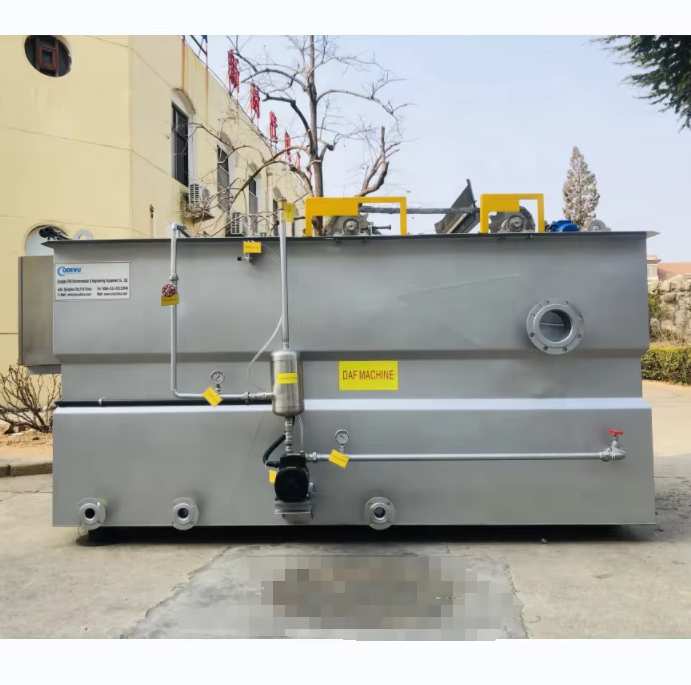
Modular Design and Rapid Deployment of Sewage Treatment Package Systems
Prefabricated modular design has reshaped how small and medium facilities manage wastewater—delivering speed, flexibility, and reliability that traditional cast-in-place plants cannot match. By integrating treatment stages into standard shipping containers or skid-mounted frames, suppliers deliver fully functional, factory-tested sewage treatment plants ready for immediate commissioning. This approach eliminates the bulk of on-site civil works, weather delays, and extended project timelines.
Factory-Prefabricated Units Reduce Installation Time and Site Disruption
Off-site manufacturing removes dependency on site conditions and sequential construction trades. Once delivered, installation requires only a level pad, inlet/outlet connections, and power hookup—a process typically completed in two to four weeks. A 2023 benchmarking study across decentralised treatment projects found factory-built units reduced on-site installation time by 45–60% compared to equivalent in-situ concrete plants. The compact footprint minimises excavation, heavy vehicle traffic, and disruption to adjacent operations—critical for hotels, remote camps, and residential townships where business continuity and environmental compliance must begin on day one.
Scalable Capacity Matching: From 50 to 5,000 PE Without Infrastructure Overhaul
Package systems scale organically through parallel module addition—not infrastructure replacement. A unit sized for 80 people can be expanded to serve hundreds simply by adding identical skids. This “building-block” architecture supports flows from 50 to over 5,000 population equivalent (PE), enabling phased investment aligned with actual demand. Because modules operate independently, expansion or maintenance rarely requires full system shutdown. This avoids costly upfront oversizing—making it ideal for seasonal tourism sites, staged developments, and municipalities facing uncertain growth trajectories.
Total Cost Efficiency of Small-Scale Sewage Treatment Plants
Small-scale sewage treatment plants deliver compelling lifecycle value—not just lower capital outlay, but sustained operational savings. Off-site fabrication slashes field assembly time and civil works, while incremental capacity scaling prevents idle, oversized assets. Operationally, advanced aeration technologies—including fine-bubble diffusers and high-efficiency blowers—target the largest energy load: aeration, which accounts for 25–60% of total electricity use. Modern package units reduce this share by up to 50%. Remote monitoring enables part-time operator oversight, and stable biological processes cut chemical dependency. When land acquisition, permitting complexity, and future expansion risk are factored in, decentralised systems consistently outperform centralised alternatives on total cost of ownership—especially for communities, hospitality operators, and industrial sites operating under tight capital constraints.
Process Selection for Real-World Constraints: Land, Energy, and Operator Capacity
Selecting the right biological treatment process for a decentralised sewage treatment plant demands rigorous alignment with site realities—not theoretical performance. Mismatched technology leads to regulatory non-compliance, excessive energy use, and unsustainable maintenance burdens. For hotels, remote camps, and small townships, three configurations dominate: Membrane Bioreactor (MBR), Sequencing Batch Reactor (SBR), and extended aeration—each with distinct trade-offs.
MBR vs. SBR vs. Extended Aeration: Performance Trade-Offs for Hotels, Camps, and Townships
MBR delivers premium effluent quality—often achieving turbidity below 0.5 NTU—and occupies minimal space, making it suitable for urban hotels or underground installations. But it consumes ~60% more energy than conventional alternatives and requires skilled staff for membrane integrity testing and cleaning. SBR handles variable flow and load swings effectively, eliminating separate clarifiers and reducing land use by ~30% versus extended aeration. Its timer-driven cycle is robust but depends on reliable PLCs and decant mechanisms—failures cascade quickly. Extended aeration, a low-rate activated sludge variant, trades footprint for simplicity: basins are larger, but the process tolerates operational inconsistency better than others. It’s manageable by staff with basic training—ideal where skilled labour is scarce or shared across multiple site functions.
The decision hinges on fit, not superiority: MBR for space-constrained, well-resourced sites; SBR for moderate space and fluctuating occupancy; extended aeration for simplicity, land availability, and limited operator bandwidth.
Low-Maintenance Reality Check: Aligning Technology with On-Site Operational Capability
“Low-maintenance” claims often misrepresent field reality. No biological system runs autonomously. Extended aeration still requires weekly sludge wasting and periodic clarifier cleaning; SBR relies on precise mechanical decanting and controller uptime—where a single solenoid failure halts treatment. In remote mining camps or seasonal resorts, where operators juggle HVAC, power, and water systems, complexity amplifies risk. A 2023 operator survey by the Water Environment Federation found remote monitoring with automated alarms cut unscheduled service calls by 45%—but only when on-site staff could perform basic interventions. The safest strategy matches technology to actual human capacity: choose long sludge age processes (e.g., extended aeration) with simple sensors if attention is part-time—or pair telemetry with a responsive service contract. Technology must serve the people who operate it—not the reverse.
Environmental and Regulatory Compliance Advantages of Decentralized Sewage Treatment Plants
Decentralised sewage treatment plants significantly reduce environmental impact by treating wastewater at or near the source—eliminating energy-intensive long-distance pumping and associated pipe leakage risks. This directly lowers greenhouse gas emissions and mitigates the threat of untreated overflows into sensitive surface waters or groundwater. Advanced package systems meet or exceed municipal effluent standards: MBR configurations routinely achieve 99% fecal coliform removal and phosphorus limits without chemical dosing.
Regulatory compliance becomes more predictable and adaptive. Operators can calibrate treatment parameters to local discharge requirements—avoiding the inflexibility of large municipal plants designed for broad averages. For small communities and industrial facilities, this precision reduces permit violations, monitoring burden, and enforcement risk. Increasingly, jurisdictions—including the U.S. EPA and EU Member States—explicitly promote decentralised treatment as a best practice for protecting aquatic ecosystems and drinking water sources. Choosing a decentralised system is no longer just pragmatic—it’s a proactive commitment to environmental stewardship and regulatory resilience.
FAQ
What are the advantages of modular sewage treatment systems?
Modular sewage treatment systems provide speed, flexibility, and reliability by integrating treatment stages into prefabricated units. These systems reduce on-site construction time, require minimal civil works, and offer scalability for future capacity increases.
How do factory-prefabricated units minimize installation disruptions?
Factory-prefabricated units are delivered ready for installation, requiring only basic infrastructure such as a flat surface, power, and plumbing connections. This minimizes site disruption, excavation, and vehicle traffic.
What capacities can packaged sewage treatment plants handle?
Packaged sewage treatment plants can scale from serving 50 to more than 5,000 population equivalents (PE). Additional capacity can be achieved by adding modules to the system.
How do small-scale sewage plants achieve cost efficiency?
Small-scale sewage plants reduce costs through off-site fabrication, decreased energy consumption, and scalable capacity. Modern designs also save operational costs with advanced technologies and remote monitoring capabilities.
Which sewage treatment process is best for small and medium sites?
The choice depends on site conditions and staff capabilities: MBR is ideal for space-constrained and skilled operations; SBR suits variable flows and moderate space demands; extended aeration is simple and tolerates inconsistency, ideal for less-trained operators.
What are the environmental benefits of decentralized sewage treatment systems?
Decentralized systems minimize environmental impact by eliminating long-distance pumping, reducing greenhouse gas emissions, and avoiding overflows. They meet or exceed municipal standards for wastewater treatment and promote local environmental stewardship.
Table of Contents
- Modular Design and Rapid Deployment of Sewage Treatment Package Systems
- Total Cost Efficiency of Small-Scale Sewage Treatment Plants
- Process Selection for Real-World Constraints: Land, Energy, and Operator Capacity
- Environmental and Regulatory Compliance Advantages of Decentralized Sewage Treatment Plants
-
FAQ
- What are the advantages of modular sewage treatment systems?
- How do factory-prefabricated units minimize installation disruptions?
- What capacities can packaged sewage treatment plants handle?
- How do small-scale sewage plants achieve cost efficiency?
- Which sewage treatment process is best for small and medium sites?
- What are the environmental benefits of decentralized sewage treatment systems?