Amid the relentless wave of large-scale, industrialized development sweeping the global livestock breeding sector, pig farming stands out as a cornerstone industry vital for ensuring food security and people's livelihood. However, this critical secto...
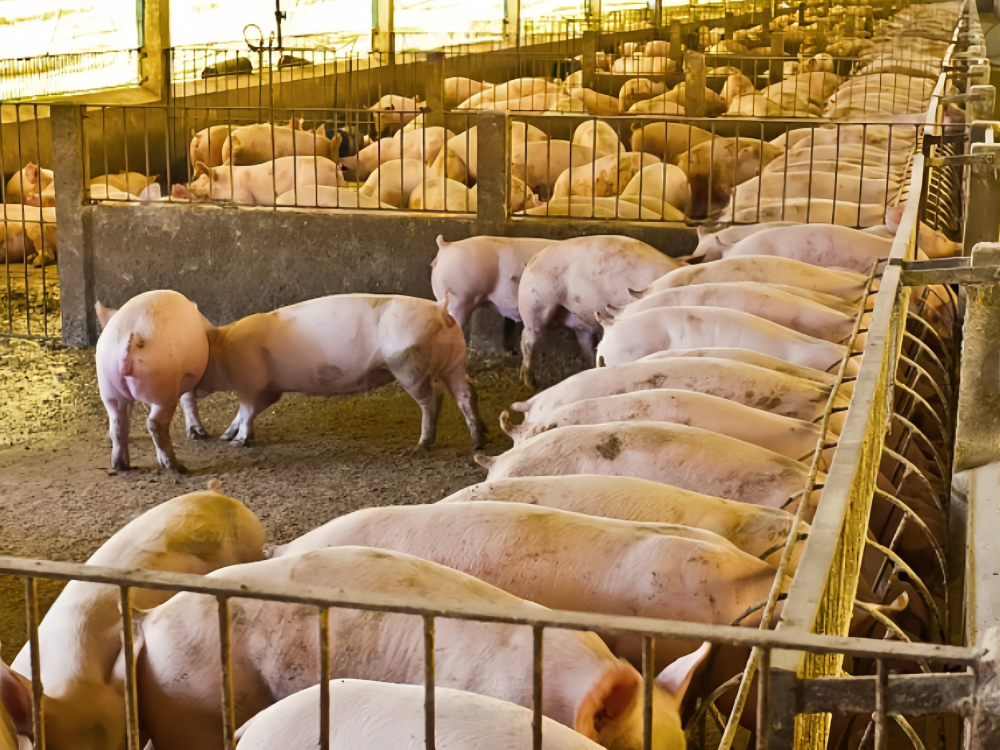
Amid the relentless wave of large-scale, industrialized development sweeping the global livestock breeding sector, pig farming stands out as a cornerstone industry vital for ensuring food security and people's livelihood. However, this critical sector has perpetually been confronted with the formidable and dual challenges of "rapid capacity expansion" on one hand, and "stringent pollution control" on the other. This paradox lies at the heart of sustainable agricultural development: how to meet the growing demand for animal protein while minimizing the environmental footprint, particularly the impact of waste by-products.
The case of modern pig farming enterprises in South Korea serves as a poignant illustration of this global dilemma. These enterprises, many with decades of deep-rooted experience and expertise in the breeding industry, have embarked on a path of continuous scaling-up to achieve economies of scale and enhance market competitiveness. This expansion, while economically beneficial, has led to a dramatic surge in the volume of manure and wastewater generated. Consequently, these enterprises find themselves grappling with severe and complex water pollution problems that threaten local ecosystems and compliance with increasingly strict environmental regulations.
The wastewater emanating from these intensive pig farms is not merely dilute sewage; it is a highly concentrated, multi-pollutant cocktail, presenting a significant treatment challenge. Key water quality parameters often reach alarming levels. The Chemical Oxygen Demand (COD), a measure of the organic pollutant load, can soar as high as 6000 mg/L, indicating a tremendous amount of oxidizable organic matter. Simultaneously, the concentration of ammonia nitrogen (NH3-N) frequently exceeds 1200 mg/L. High levels of ammonia nitrogen are particularly problematic as they are toxic to aquatic life and can lead to eutrophication in receiving water bodies. Beyond these chemical metrics, the wastewater is characterized by the presence of substantial amounts of suspended solids, primarily comprising undigested feed particles and pig manure residue. This solid fraction not only contributes to the high COD but also complicates treatment processes. Furthermore, the waste stream harbors a diverse and potentially dangerous array of pathogenic microorganisms, including bacteria, viruses, and parasites, originating from the animal digestive tracts. These pathogens pose serious risks to public and animal health if not adequately inactivated, potentially contaminating water sources and spreading disease.
Traditional wastewater treatment methods often fall short when faced with such a high-strength, complex effluent. Conventional activated sludge processes can be overwhelmed by the high organic and nitrogen loads, leading to system failures and inconsistent discharge quality. Lagoon systems, while common, require vast land areas and are susceptible to leaks, odours, and seasonal variations in performance. The limitations of these conventional approaches often meant that farms struggled to meet discharge standards, facing potential fines, operational restrictions, and community opposition. The challenge was not merely to treat the waste but to do so reliably, efficiently, and cost-effectively within the constraints of a farming operation.
It is within this challenging context that the practical application and integration of advanced wastewater treatment technologies, such as the QDEVU wastewater treatment system, have proven transformative. The adoption of such targeted technological solutions has enabled forward-thinking enterprises to pivot from a defensive posture of mere "pollution discharge" or compliance-based treatment towards an ambitious and strategic paradigm of "comprehensive resource utilization of manure and sewage."
So, how does this leapfrog breakthrough manifest in practice? The journey begins with a more robust and efficient initial separation of solid manure from the liquid fraction. Advanced solid-liquid separators, such as screw presses or centrifuges, are employed to extract a significant portion of the solid manure residue. This separated solid fraction is no longer viewed as mere waste but as a valuable resource. It can be composted efficiently, with controlled aeration and temperature, to produce high-quality, stable, and nutrient-rich organic fertilizer. This compost can be bagged and sold, creating a new revenue stream and reducing the need for chemical fertilizers in surrounding agricultural lands. In some advanced systems, these solid wastes are also channeled into anaerobic digesters.
The liquid fraction, though still high in dissolved pollutants, is then subjected to a multi-stage treatment process within systems like QDEVU. This typically involves a preliminary anaerobic digestion stage. In oxygen-free tanks, consortia of microbes break down the complex organic molecules, significantly reducing the COD and BOD (Biochemical Oxygen Demand). A crucial benefit of this anaerobic process is the capture of biogas—a mixture primarily of methane (CH4) and carbon dioxide (CO2). This biogas is a potent renewable energy source. It can be combusted in generators to produce electricity and heat for the farm facilities, offsetting energy costs and enhancing operational independence. After upgrading, it can even be injected into the natural gas grid or used as vehicle fuel.
Following anaerobic treatment, the water undergoes a series of aerobic processes. Here, in the presence of oxygen, specialized bacteria perform the critical task of nitrification, converting the toxic ammonia nitrogen first into nitrite and then into nitrate. Subsequent anoxic stages facilitate denitrification, where other bacteria convert the nitrate into harmless nitrogen gas, which is released into the atmosphere. This biological nitrogen removal is essential for making the effluent safe for discharge or reuse. Advanced membrane technologies, such as Ultrafiltration (UF) or Reverse Osmosis (RO), may be employed as a final polishing step, removing remaining suspended solids, pathogens, and salts. The result is water of such high quality that it can be safely discharged into the environment, used for irrigation, or even recycled for non-potable purposes within the farm itself, such as barn cleaning, thereby conserving fresh water resources.
Therefore, the implementation of integrated systems transforms the entire waste management framework. The problematic "waste" is systematically broken down and converted into three key resources: nutrient-rich organic fertilizer from the solids, renewable biogas energy from the anaerobic process, and high-quality reusable water. This closed-loop, circular economy approach not only resolves the acute pollution problems—dramatically reducing COD, ammonia nitrogen, and pathogen counts to compliant levels—but also enhances the farm's sustainability, economic resilience, and social license to operate. It represents a fundamental leap from treating pollution as a cost center to managing resources as a profit center, setting a new standard for the future of intensive livestock breeding worldwide.
 EN
EN