 EN
EN

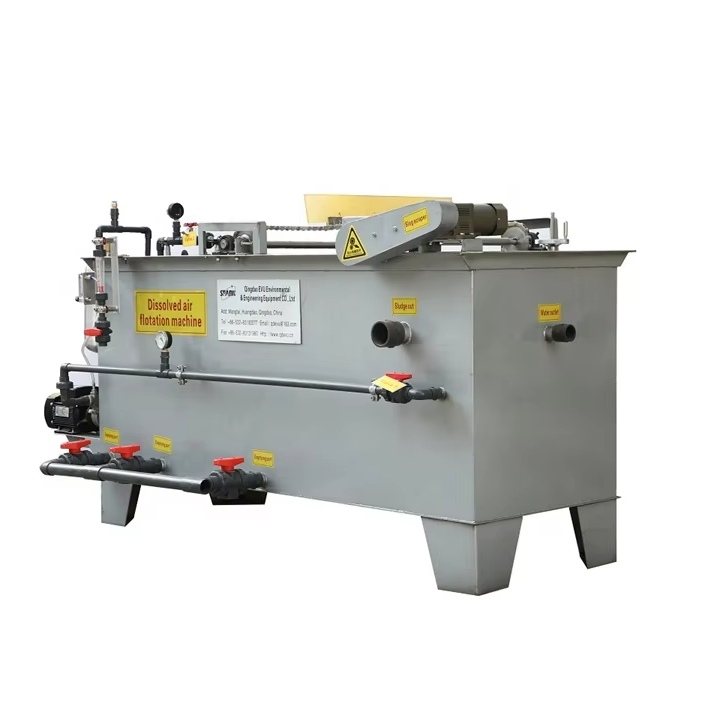
The Shift Toward Smarter Air Saturation
DAF technology has come a long way from simply pumping air into water and hoping bubbles attach to solids. Modern dissolved air flotation systems now control the saturation process with far more precision. Instead of running a recycle pump at full speed all day, newer units adjust the air to solids ratio based on real time turbidity or flow signals. That keeps the whitewater stream stable and avoids wasting energy on over saturation.
The benefit shows up in treatment consistency. When the recycle stream is properly saturated, the microbubbles form uniformly, and floc particles rise at a predictable rate. A poorly saturated system produces large, unstable bubbles that break apart before they reach the surface. That leads to carryover and cloudy effluent. Smarter saturation is not about adding more air, it is about adding the right amount at the right pressure.
Microbubble Size Is No Longer Guesswork
Bubble size matters more than total air volume. Smaller bubbles have more surface area per unit of air and rise more slowly, which gives them more contact time with suspended solids. Traditional DAF units often relied on needle valves and manual adjustments, which made bubble size inconsistent from one shift to the next. Newer designs use specialized nozzles and controlled pressure drops to generate a narrow bubble size distribution.
The practical impact is significant. A system producing bubbles in the 30 to 50 micron range will capture fine particles, including algae and light floc, much better than one producing 100 micron bubbles. The Water Research Foundation has published data showing that smaller microbubbles improve turbidity removal by up to 15 percent in some surface water applications. That kind of gain comes from design, not from adding more chemicals.
Loading Rates and Footprint Shrink Together
One of the biggest changes in recent DAF innovation is the increase in hydraulic loading rates. Older systems often ran at 2 to 4 gallons per minute per square foot. Modern high rate DAF units can operate at 10 to 20 gallons per minute per square foot without sacrificing effluent quality. That means a plant can handle the same flow in a much smaller tank.
The table below compares conventional DAF with high rate DAF on a few key parameters.
| Parameter | Conventional DAF | High Rate DAF |
|---|---|---|
| Hydraulic loading rate | 2 to 4 gpm/sf | 10 to 20 gpm/sf |
| Typical footprint | Larger | 50 to 70 percent smaller |
| Effluent turbidity | Good | Equal or better |
| Chemical consumption | Moderate | Similar or slightly lower |
A wastewater treatment plant in Shandong replaced two aging conventional DAF cells with one high rate unit. The new system handled the same peak flow in less than half the floor space, and the operators reported easier sludge removal because the float layer stayed thicker and drier.
Real World Performance in a Food Processing Plant
A poultry processing facility in eastern China struggled with high fat and oil loading in its pretreatment system. The existing DAF unit could not keep up during peak production hours, and the downstream biological system suffered from grease buildup. After installing a modern DAF system with improved saturation control and a variable speed recycle pump, the plant saw effluent oil and grease levels drop by more than half.
The operators also noticed a change in chemical use. Because the new unit formed a denser float layer, polymer dosing was reduced by roughly 20 percent without hurting removal efficiency. That may not sound like a huge number, but over a full year the savings on polymer alone covered a meaningful part of the upgrade cost. The case shows that DAF innovation is not just about mechanical parts. It changes the economics of treatment.
Energy Savings That Show Up on the Bill
Air compressors and recycle pumps account for most of the energy use in a DAF system. Older designs often ran these components at fixed speeds, which meant the system used the same power whether the plant was at half load or full load. Modern variable frequency drives allow the recycle pump and compressor to match the actual flow, cutting energy use during off peak periods.
The U.S. Environmental Protection Agency has noted that energy efficiency improvements in water and wastewater treatment can reduce operating costs significantly without compromising performance. In a DAF system, the easiest win is usually the recycle pump. Reducing the recycle ratio from 15 percent to 8 percent, when the influent allows it, can lower energy consumption by a noticeable margin. The key is having the control system to make that adjustment safely.
Why Build Quality and Local Support Still Matter
All these innovations only deliver results if the equipment is built to hold up under daily operation. Thin steel plates, poor welding, and undersized piping create weak points that fail under pressure. A DAF unit that looks good in a brochure can become a maintenance headache if the tank flexes or the air dissolving vessel corrodes within two years.
This is where manufacturing experience and supply chain control make a difference. EVU builds DAF systems with attention to structural integrity and component quality, which helps operators avoid the downtime that comes from cheap fabrication. When the equipment is made with consistent quality control and supported by a team that understands local water conditions, the technology performs the way it was designed to perform. That combination of innovation and reliable manufacturing is what turns a treatment upgrade into a long term asset.