 EN
EN

What a Dosing Machine Actually Does on the Plant Floor
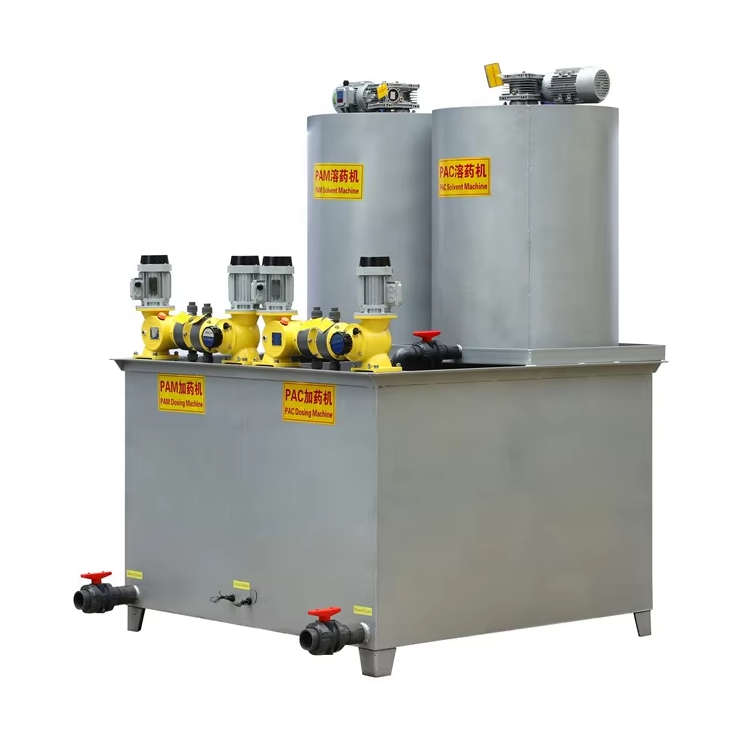
A dosing machine is a piece of equipment that injects a precise volume of liquid chemical into a process stream at a controlled rate. In water treatment, food processing, pulp and paper, and plenty of other industrial settings, the goal is almost always the same. Operators need to add just enough polymer, coagulant, acid, or disinfectant to trigger a reaction without wasting chemical or overshooting the target. The machine combines a storage tank, a metering pump, and a control system to make that happen automatically. Instead of a worker pouring a bucket of flocculant into a mixing tank every few hours, the system pulls from a bulk container and doses continuously or in timed pulses. The real value shows up when process conditions change. A good dosing machine adjusts output based on flow signals, pH readings, or turbidity levels, so the chemical feed stays in proportion to what is actually happening downstream.
The Core Components Behind Accurate Chemical Feed
At its heart, any reliable dosing machine has four main parts working together. The storage tank holds the concentrated chemical and often includes a level sensor to alert operators before it runs dry. The metering pump is the muscle of the system. It moves a known volume per stroke or per revolution, which is what makes repeatable dosing possible. A mixer or agitator keeps settled solids from clogging the suction line, especially with lime slurry or powdered activated carbon. The controller ties everything together. It can be as simple as a dial adjusting pump speed, or as complex as a PLC receiving signals from multiple sensors and adjusting stroke frequency in real time. The material selection for wetted parts also deserves attention. Chemicals like sodium hypochlorite or ferric chloride will eat through the wrong elastomer in a matter of weeks. That is why experienced engineers always ask about chemical compatibility before specifying a pump head, valve, or seal material.
Why Manual Chemical Addition Creates Process Chaos
Manual dosing looks cheap on paper, but the hidden costs stack up fast. A technician might add roughly the right amount of polymer to a flocculation tank, but the concentration swings from shift to shift. When the dosage is too low, suspended solids escape the clarifier and the effluent gets cloudy. When it is too high, the excess chemical creates sludge that costs money to dewater and dispose of. A 2019 survey by the Water Environment Federation noted that inconsistent chemical feed was among the top five causes of noncompliance in small to mid sized treatment plants. The problem is not laziness. Even a careful operator cannot match the repeatability of a properly calibrated metering pump over an eight hour shift. Human attention drifts, batch volumes vary, and different workers develop their own habits. The dosing machine removes that variability and gives the plant a defensible record of how much chemical went into the process.
Comparing Pump Technologies for Different Dosing Tasks
Not every dosing job calls for the same pump. The choice depends on fluid viscosity, required accuracy, discharge pressure, and whether the chemical is abrasive or corrosive. Here is a practical comparison of three common pump types used in industrial dosing applications.
| Pump Type | Best Suited For | Typical Accuracy | Pressure Range | Maintenance Notes |
|---|---|---|---|---|
| Diaphragm pump | Clear liquids, acids, caustics | Plus or minus 1 to 2 percent | Up to 150 psi | Periodic diaphragm replacement |
| Peristaltic pump | Viscous or slurry fluids | Plus or minus 2 to 5 percent | Low to medium | Tube wear is normal |
| Piston pump | High pressure injection | Plus or minus 0.5 to 1 percent | Very high | Requires clean fluids |
Peristaltic pumps tolerate solids and are easy to clean, but the tube replacement cost adds up in continuous duty. Diaphragm pumps offer a strong balance of chemical resistance and accuracy for most water treatment chemicals. Piston pumps are overkill for low pressure applications but shine when injecting into high pressure lines.
A Wastewater Retrofit That Changed Discharge Compliance
A textile dyeing plant in Zhejiang province had been manually dosing coagulant and caustic into its equalization tank for years. Effluent pH would swing from 5.8 to 9.4 within a single shift, and the local discharge permit required a range of 6.5 to 8.5. The plant manager tried adding more labor, but the results barely improved. During a retrofit, an engineering team installed automated dosing machines for both chemicals, with pH sensors feeding signals back to the pump controllers. After tuning, the pH stayed between 6.8 and 7.6 across a two week monitoring period. Sludge production also dropped because the coagulant dose tracked actual flow instead of being dumped in fixed amounts. The plant did not need to change its treatment process. It just needed to apply the chemicals with more consistency.
Sizing and Selecting a Dosing System Without Guesswork
Picking the right dosing machine starts with three questions. What is the maximum and minimum flow rate of the process stream? What is the target chemical concentration in milligrams per liter? How much turndown is needed for low flow periods? The answers determine pump capacity, stroke length, and control strategy. A pump that is too large will struggle with accuracy at low output. A pump that is too small will run at full speed constantly and wear out faster. Engineers also check the suction lift, the viscosity of the chemical, and whether the installation site has adequate ventilation for chemical storage. EVU supplies dosing equipment as part of integrated water treatment packages, including coagulation and disinfection systems. The company handles equipment manufacturing, installation, commissioning, and operator training from its Qingdao facility, which makes it easier to match the dosing machine to the rest of the treatment train. That kind of system level thinking matters because a dosing pump is only as good as the sensors and controllers that tell it what to do.
Table of Contents
- What a Dosing Machine Actually Does on the Plant Floor
- The Core Components Behind Accurate Chemical Feed
- Why Manual Chemical Addition Creates Process Chaos
- Comparing Pump Technologies for Different Dosing Tasks
- A Wastewater Retrofit That Changed Discharge Compliance
- Sizing and Selecting a Dosing System Without Guesswork