 EN
EN

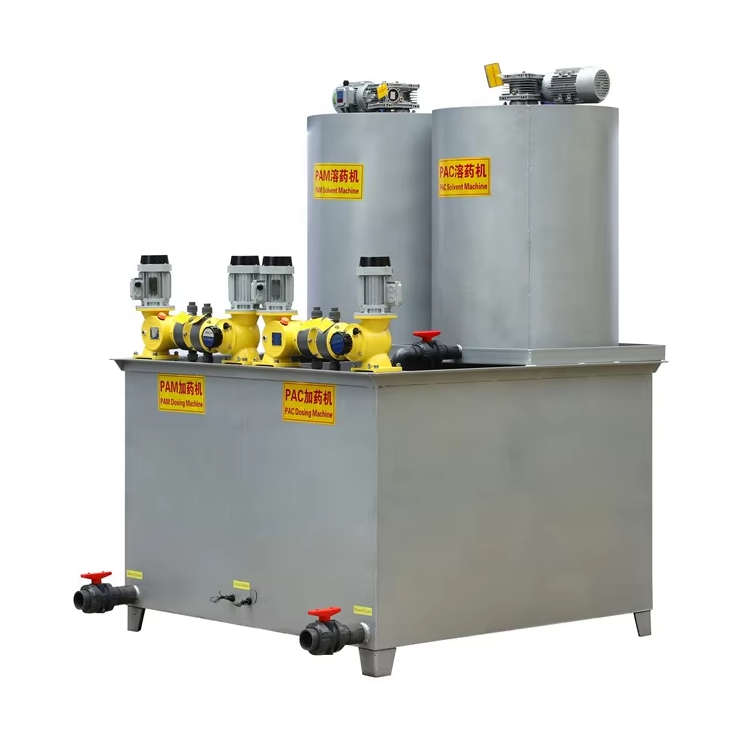
Why Accurate Chemical Injection Starts With the Dosing Machine
A water treatment plant can have good source water and still miss residual targets because the dosing machine is fighting itself. Chemical injection is not just a pump bolted to a tank. It is a metering problem shaped by suction lift, viscosity, backpressure, off gassing, and the control signal that tells the pump how fast to run. When one variable drifts, the display can look stable while the actual dose moves the wrong way. The dosing machine has to deliver a repeatable volume against changing line pressure, survive the chemical it touches, and respond to a flow or residual signal without lag.
Flow Pacing and Residual Feedback Keep Dose on Target
Most reliable systems use two layers. Flow pacing takes a 4-20 mA or pulse signal from a flow meter and adjusts stroke speed or motor rpm with plant flow. If flow doubles, dose follows. Residual feedback reads treated water with a chlorine or pH analyzer and trims the setpoint through a PID loop. Flow pacing handles bulk change. Feedback corrects for demand, chemical strength, and sensor drift. Neither layer works well alone. Flow pacing without feedback cannot see a day tank mixed weak. Feedback without flow pacing chases surges and overshoots. Best results come from flow as feedforward and residual as slow correction.
Calibration, Turndown, and the Chemistry That Fights Back
Calibration is where accuracy claims meet reality. A drawdown test in a graduated cylinder is still the most direct check. Run the pump at a fixed speed for a known time, measure the volume, and compare it to the setpoint. Repeat at low, mid, and high stroke rates. If the low end is off by more than a few percent, the turndown ratio may be wider than the application can support.
Chemical properties also matter. Sodium hypochlorite degasses and can form bubbles in the suction line. Polyaluminum chloride can be viscous and abrasive. Caustic soda can crystallize at seals. A diaphragm metering pump handles high pressure but can suffer from vapor lock. A peristaltic dosing machine handles slurries and gases better but needs tube replacement. Progressive cavity pumps work for polymers but are less suited to fast control changes.
| Technology | Typical turndown | Best fit | Common watchout |
|---|---|---|---|
| Peristaltic | 10:1 to 100:1 | slurries, off gassing chemicals | tube wear, pulse flow |
| Diaphragm metering | 10:1 to 100:1 | high pressure, clean liquids | vapor lock, valve wear |
| Piston metering | 5:1 to 20:1 | high pressure, low viscosity | seal wear, poor with solids |
| Progressive cavity | 5:1 to 20:1 | polymers, high viscosity | pulsation, limited turn down |
Standards help frame selection. NSF/ANSI/CAN 61 covers components that contact drinking water, and ISO 15839 addresses online water quality measuring equipment. Those references do not guarantee accuracy, but they set a baseline for materials and performance claims.
A Municipal Retrofit Where Air Entrainment Threw Off the Dose
During a retrofit at a 30,000 cubic meter per day municipal plant in southern China, the project team found a peristaltic dosing machine delivering about 70 percent of set dose while the flow meter and pump display agreed. A small leak at a suction union let sodium hypochlorite draw air into the pump head. The tube looked fine, and calibration had used clear test water, so the fault only appeared under real chemical feed. The fix replaced the union, raised the day tank outlet, and added a degassing valve at the suction line high point. A drawdown test brought the low stroke rate back within two percent of setpoint. A dosing machine is only as accurate as the suction side and the chemical it sees.
Installation Details That Decide Whether Accuracy Holds
Good installation protects accuracy long after commissioning.
Keep suction lines short, flooded, and free of high points that trap gas.
Mount the dosing machine on a stable base so vibration does not affect stroke length.
Use a calibration column and a pressure relief valve on the discharge side.
Separate signal wiring from motor cables to reduce electrical noise.
Label chemical lines and provide a safe way to flush before maintenance.
A static mixer and minimum straight pipe length after injection help the chemical blend before the sample point. If the analyzer pulls a sample too close to the injection quill, the control loop chases incomplete mixing rather than true residual.
What to Look For in a Dosing Machine Supplier
Hardware matters, but so does the support behind it. A supplier that understands water treatment can help size the pump, select wetted materials, and review control logic before installation. That reduces the chance of a pump that is technically correct but practically hard to calibrate.
EVU works as an integrated technology enterprise in water treatment, with capabilities from R&D design to equipment manufacturing, installation and commissioning, and training. Its product range includes integrated sewage treatment plants, MBR systems, seawater desalination systems, screw sludge dewatering machines, reverse osmosis pure water machines, and polyaluminium chloride. For projects that need a dosing machine to fit a larger treatment train, that breadth can simplify sourcing and reduce interfaces.
Table of Contents
- Why Accurate Chemical Injection Starts With the Dosing Machine
- Flow Pacing and Residual Feedback Keep Dose on Target
- Calibration, Turndown, and the Chemistry That Fights Back
- A Municipal Retrofit Where Air Entrainment Threw Off the Dose
- Installation Details That Decide Whether Accuracy Holds
- What to Look For in a Dosing Machine Supplier