 EN
EN

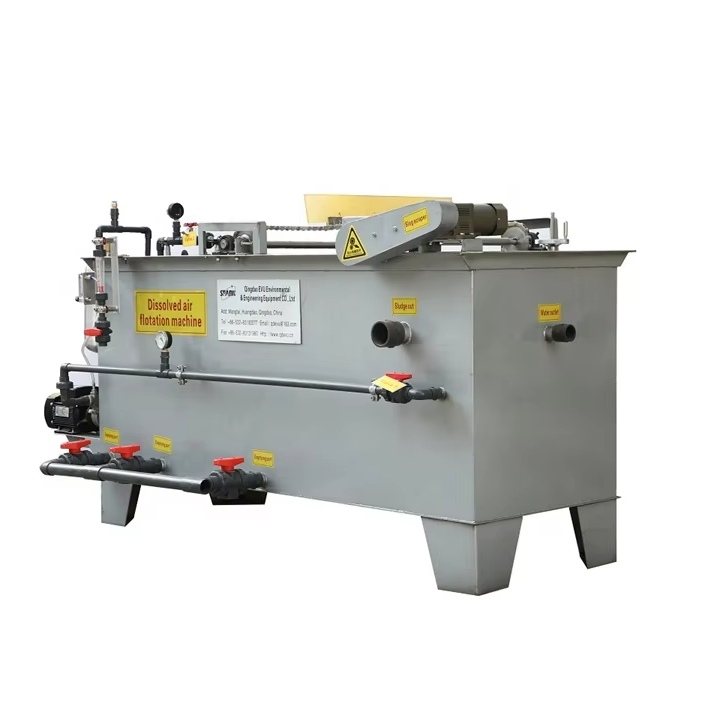
When Whitewater Turns Clear and Bubbles Disappear
A DAF unit works because the wastewater in the contact zone looks like a glass of milk. That milky appearance is a cloud of micro bubbles, and when it disappears, separation performance collapses. Operators often notice that the float layer thins out, effluent turbidity climbs, and the saturator pressure gauge still reads normal. The problem is almost always in the air delivery circuit, not the pressure vessel itself. The first check is the whitewater pipe, specifically the nozzle or needle valve that releases the pressurized flow into the contact chamber. Over time, these orifices scale up with calcium carbonate or plug with debris. A maintenance manager at a poultry rendering plant once described spending an entire shift chasing high effluent oil and grease before discovering that a two millimeter buildup of scale on the inside of the whitewater nozzle had choked the bubble cloud to a fraction of its design flow. The fix is straightforward: scheduled cleaning of the whitewater nozzles with a weak acid solution, and installation of a simple flow indicator downstream of the pressure release valve so operators can see at a glance whether the whitewater stream is healthy. The Water Environment Federation’s Manual of Practice No. 8 notes that maintaining a stable whitewater flow is the single most important operational checkpoint for any DAF system.
The Floating Sludge Blanket That Refuses to Thicken
A properly conditioned DAF sludge blanket should look like thick whipped cream and hold its shape when the skimmer pushes it into the hopper. When the float is thin, watery, and flows back into the tank instead of collecting, the chemical pretreatment step is usually out of tune. The most common cause is underdosing of coagulant, which leaves colloids un destabilized and unable to attach to bubbles. But overdose can be just as harmful: excess polymer can create a sticky, heavy floc that sinks rather than floats. An environmental engineer working with a dairy wastewater DAF found that the blanket thickness doubled when the team shifted from a single high dose of ferric chloride at the pipe inlet to a split injection strategy, with half the dose ahead of a static mixer and half directly into the flocculation tube. The change allowed the pin floc to form first, then build into larger, buoyant aggregates. The jar test remains the most practical tool for tuning chemistry. A fifteen minute bench test with a sample of the actual influent saves hours of guesswork on the plant floor. Sources like the American Water Works Association stress that jar testing should be repeated whenever the production line changes product, because even a shift from whole milk to skim milk can alter the wastewater’s charge demand.
Skimmer Mechanism Failures and Uneven Sludge Removal
A DAF skimmer that drags a bent flight across the tank or stops midway through its cycle turns a separation device into a solids recirculation pump. The mechanical demands on a skimmer are not trivial. It runs in a humid, sometimes corrosive headspace, and the chain, sprockets, and bearings must withstand continuous duty. Uneven sludge removal creates dead zones where solids accumulate, go septic, and release dissolved gases that disturb the float layer. A maintenance supervisor at a chemical plant shared that they reduced skimmer related downtime by switching from a greased bushing chain to a self lubricating engineered plastic chain designed for wastewater service. The improvement allowed them to extend lubrication intervals and virtually eliminated unscheduled stops caused by a frozen chain link. Routine inspection should include a check of flight alignment and wear strip condition. If the flights are scraping too hard on one side, the float tank walls can wear thin over time, leading to leaks that are expensive to repair. The key is to treat the skimmer as a critical rotating asset, not an afterthought, and to stock a spare chain link kit on the shelf.
Chemical Dosing Drift and Its Effect on Effluent Quality
Dosing pumps do not drift maliciously. They drift because suction strainers clog, peristaltic tubes fatigue, and operators sometimes dial up the speed to compensate for a problem that is actually hydraulic rather than chemical. When the effluent from a DAF unit suddenly carries a higher load of suspended solids, the first place to look is the chemical day tank. A food processor handling frying oil wastewater discovered that their flocculant pump had been pulling air through a cracked suction line for an entire weekend. The polymer dose was effectively zero, and the DAF was acting as a simple grease trap. Installing a flow verification sensor on the polymer line and a low level alarm on the day tank prevented a repeat. Flow pacing is another tool that pays for itself quickly. By tying the chemical dosing rate to the influent flow meter signal, the system automatically adjusts when production rises or falls, keeping the dosage ratio constant without operator intervention. This level of automation moves the DAF from a machine that needs constant nursing to one that runs predictably across shifts.
Saturator Efficiency Loss and Rising Air to Solids Ratio
The saturator is the heart of the DAF, and its job is to dissolve air into a recycle stream of clean water under pressure. When the saturator efficiency drops, the bubble cloud shrinks, the air to solids ratio falls, and the unit loses its lifting power. The most common efficiency killer is a fouled packed bed or internal media. Iron deposits, biological slime, and scale coat the media surface and reduce the contact area where air dissolution occurs. A process engineer at an oil refinery wastewater plant described how they restored saturator performance by isolating the vessel and circulating a cleaning solution of sulfamic acid through the packed bed for four hours. The dissolved oxygen concentration in the whitewater stream jumped back to near saturation, and the DAF immediately recovered its design removal rate. Beyond periodic cleaning, saturator performance should be monitored by comparing the saturation pressure against the dissolved oxygen level in the whitewater. If the pressure is high but the dissolved oxygen is low, the saturator media is fouled. If both are low, the air compressor or the level control inside the vessel may be the culprit. A saturator in good condition delivers a whitewater stream that is consistently above eighty percent of saturation.
How EVU Designs Reliability Into Every DAF System
Most of the problems described above are preventable long before they happen on site. They are prevented by how the DAF unit is designed, built, and supported. EVU has focused its engineering resources on dissolved air flotation technology, and that focus shows in the details. The saturators are sized with conservative loading rates and include accessible cleanout ports so operators can perform media maintenance without dismantling the entire vessel. The whitewater circuit includes flow meters and sample valves as standard, giving the operations team visibility into the most critical process parameter. Skimmer drives use corrosion resistant materials and are paired with simple mechanical overload protection. Beyond the hardware, EVU’s manufacturing operation is organized to deliver standardized DAF units on predictable lead times while also offering custom configurations for unusual wastewater chemistries. For plant managers who have spent too many weekends troubleshooting a poorly built DAF, partnering with a manufacturer that treats every nozzle, every weld, and every control loop as a long term reliability commitment turns the wastewater treatment system from a source of headaches into a stable, predictable part of the operation.
Table of Contents
- When Whitewater Turns Clear and Bubbles Disappear
- The Floating Sludge Blanket That Refuses to Thicken
- Skimmer Mechanism Failures and Uneven Sludge Removal
- Chemical Dosing Drift and Its Effect on Effluent Quality
- Saturator Efficiency Loss and Rising Air to Solids Ratio
- How EVU Designs Reliability Into Every DAF System