 EN
EN
The Separation Principle That Makes DAF Uniquely Effective
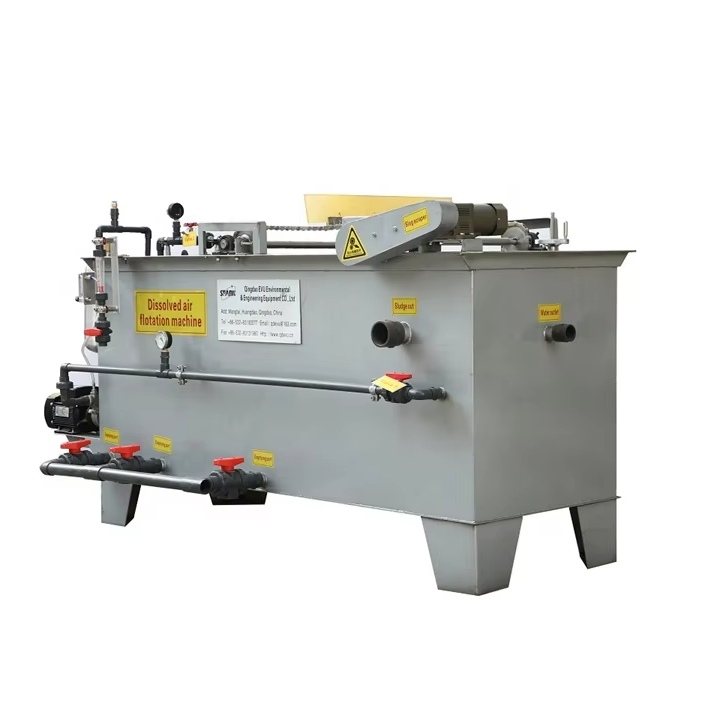
Dissolved air flotation, or DAF, is not a settling process. It works in reverse. Instead of waiting for solids to sink, DAF introduces millions of microscopic air bubbles into a wastewater stream under pressure. When the pressure is released, the bubbles nucleate onto suspended particles and lift them to the surface, forming a floating sludge blanket that a skimmer removes. This physical mechanism targets exactly the kinds of contaminants that food, chemical, and oil plants struggle with most: fats, oils, greases, colloidal solids, and light floc that simply refuse to settle by gravity. The U.S. Environmental Protection Agency identifies DAF as a best available technology for meat and poultry processing wastewater, where blood, fat, and protein create a complex emulsion. Compared to sedimentation, DAF operates with a much smaller footprint and far shorter hydraulic retention time, often reducing tank volume by over sixty percent for the same flow. That space and speed advantage matters enormously in industrial plants where floor space is already tight and production cannot stop for a slow clarifier.
How DAF Handles the Unpredictable Loads of Food Processing
Food plants do not produce a steady, predictable wastewater. A vegetable washing line might flood the drain with silt and starch at harvest peak, then switch to a low flow cleaning cycle. A dairy or ice cream facility battles emulsified butterfat that turns water into a milky suspension traditional screens cannot touch. DAF thrives under this variability because the chemical pretreatment stage can be tuned on the fly. Operators adjust coagulant and flocculant dosing to match the incoming load, and the air to solids ratio is controlled by the recycle stream and saturator pressure. A quality manager at a fruit juice processing operation noted that by installing a DAF unit after their primary screen, they reduced downstream biological treatment loading by roughly forty percent, which eliminated the seasonal spikes in effluent violations. The floating sludge also has high solids content, which lowers dewatering costs. Industry bodies like the European Food Safety Authority do not regulate wastewater equipment directly, but their hygiene framework drives food plants to choose enclosed, odor controlled DAF systems that minimize aerosol drift near production zones.
Chemical Sector Demands and the Corrosion Proof DAF Response
Chemical manufacturing wastewater is a different challenge altogether. The stream may contain emulsified solvents, polymer residues, metal hydroxides, or temperature sensitive compounds that degrade if held in a basin too long. A well engineered DAF system for the chemical sector is built with materials that resist aggressive pH and chlorides: stainless steel internals, polypropylene contact chambers, and chemically inert seals. This material integrity prevents the hidden corrosion that can turn a clarifier into a maintenance nightmare within a few years. A process engineer supporting a specialty chemicals plant explained that their DAF unit removed precipitated zinc and titanium compounds so effectively that the recovered solids could be reprocessed back into the batch, turning a waste cost into a recovered material stream. That kind of resource recovery is not unusual in the chemical industry. It becomes possible because DAF separates solids quickly, before they dissolve or react further, and the skimming action delivers a concentrated sludge that holds its chemical identity.
Oil Recovery and Produced Water Treatment in Petroleum Industries
Petroleum and petrochemical operations produce oily wastewater that challenges conventional gravity separators. Free oil droplets may rise naturally, but emulsified oil droplets below twenty microns stay suspended indefinitely. DAF breaks this deadlock by creating bubbles that attach to those tiny droplets and carry them up in seconds. Refinery operators and oil recycling plants report that a properly tuned DAF can reduce total petroleum hydrocarbons in effluent to below ten milligrams per liter when combined with chemical demulsifiers and pH adjustment. The recovered oil concentrates are often pumpable and can be reintroduced to the crude processing train, offsetting operating costs. The American Petroleum Institute API 421 design standard for oil water separators does not directly cover DAF, but many engineering firms reference it alongside DAF design guidelines to size units for slop oil and tank bottom water treatment. The compact nature of DAF also suits offshore platforms, where space and weight restrictions make large settling tanks impractical.
Operational Savings That Speak the Language of Plant Management
A piece of equipment earns its place on the plant floor when it reduces operating cost, not just when it cleans water. DAF delivers savings through several channels. First, the rapid separation means smaller downstream biological or membrane treatment stages, which cuts capital spend on new plants and operating cost on existing ones. Second, the sludge blanket is thick, often reaching three to five percent solids directly from the skimmer, which slashes the horsepower and polymer cost required for mechanical dewatering. Third, a DAF unit that is properly maintained runs with minimal operator attention, cycling automatically based on level sensors and flow meters. The payback period for a DAF installation in a medium sized food or chemical plant often lands between twelve and twenty four months when factoring in reduced surcharges, water reuse potential, and sludge handling savings. Maintenance managers appreciate that modern DAF systems come with packaged controls and remote monitoring capabilities that send alerts before a pump fails or a float switch sticks.
EVU Delivers DAF Systems Configured to Your Process Reality
A DAF unit is not a commodity item. Its performance depends on the quality of the saturator, the geometry of the flotation tank, and the reliability of the skimmer drive. EVU has focused its engineering resources on building dissolved air flotation systems that endure the specific conditions found in food, chemical, and oil processing plants. The company fabricates its DAF units with corrosion resistant materials, sizes the air dissolution system for the actual solids loading rather than just the flow rate, and integrates controls that allow operators to tune the chemistry and the recycle ratio from a single interface. EVU’s manufacturing operation is structured to deliver standard DAF models on short lead times while also supporting custom configurations for unusual process streams. For a plant manager facing tighter discharge permits or a sustainability team pushing for water reuse, partnering with a manufacturer that treats DAF as its core competence rather than a sideline product ensures the installation performs as promised from the first day of commissioning.
Table of Contents
- The Separation Principle That Makes DAF Uniquely Effective
- How DAF Handles the Unpredictable Loads of Food Processing
- Chemical Sector Demands and the Corrosion Proof DAF Response
- Oil Recovery and Produced Water Treatment in Petroleum Industries
- Operational Savings That Speak the Language of Plant Management
- EVU Delivers DAF Systems Configured to Your Process Reality